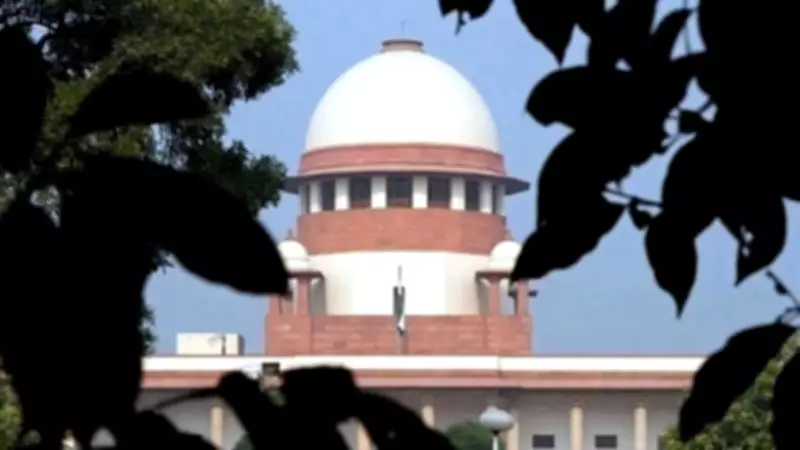
The Supreme Court has granted bail to an accused in a case under the Unlawful Activities (Prevention) Act (UAPA) involving the recruitment of so-called 'hybrid' terrorists. The case, which has been under investigation by the National Investigation Agency (NIA) since 2019, centers around allegations of radicalization and recruitment following the abrogation of Article 370 in Jammu and Kashmir.
High Court Denial Reversed
A bench of the Supreme Court reversed the decision of the High Court, which had earlier denied bail to the accused. The apex court observed that the case pertains to alleged activities of recruiting and radicalizing individuals to carry out acts of terrorism. The bench noted that the charges are serious but considered the prolonged detention and the stage of the trial in granting relief.
Background of the Case
The NIA had registered the case in 2019, alleging that the accused was involved in a conspiracy to recruit 'hybrid' terrorists—individuals who appear to lead normal lives but are activated for terror attacks when needed. The investigation pointed to links with proscribed organizations and efforts to radicalize youth in the Kashmir Valley after the change in Jammu and Kashmir's special status.

The accused had been in custody for several years, and the trial was yet to conclude. The Supreme Court, while granting bail, imposed conditions to ensure the accused does not tamper with evidence or influence witnesses.
The judgment is seen as significant in the context of UAPA cases, where bail is often difficult to obtain due to the stringent nature of the law. Legal experts have noted that the court's decision may set a precedent for similar cases involving prolonged pre-trial detention.