

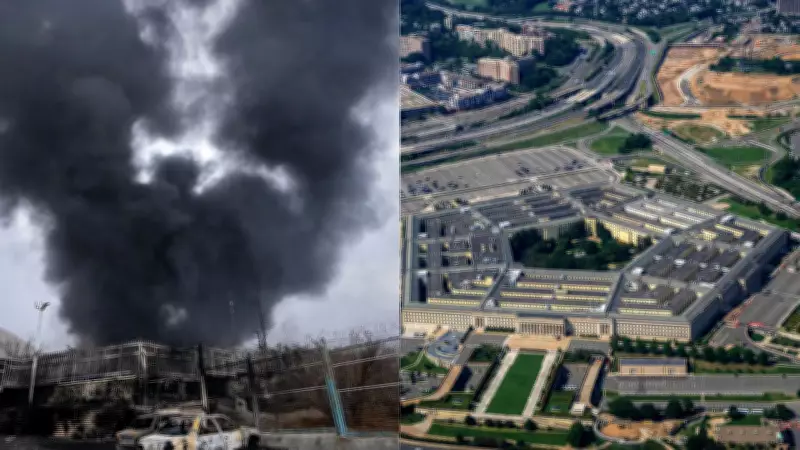
US Weapons Stockpiles Under Intense Pressure as $5.6 Billion Expended in First 48 Hours of Iran Conflict
The United States military has expended an estimated $5.6 billion worth of advanced weaponry during the initial forty-eight hours of its military operations against Iran, according to a detailed report by the Washington Post. This staggering expenditure, presented to Congress on Monday, has ignited a fierce debate over the administration's assertions that the mission is not rapidly eroding U.S. military readiness.
Concerns Over Depletion of Advanced Arsenal
The scale of the spending has raised significant alarms among defense officials regarding the swift depletion of what the report describes as the "scarce supply of America's most advanced weaponry." In response to these concerns, the Washington Post notes that U.S. and Israeli forces are planning to shift toward utilizing "more plentiful stores of laser-guided bombs" as operations progress further inland.
To sustain the ongoing and intensive campaign, the White House is anticipated to request a supplemental defense budget this week, which could reach tens of billions of dollars. This move underscores the financial and logistical pressures of the conflict.

Extensive Military Campaign and Assets Deployed
U.S. Central Command has reported that American forces have struck more than 5,000 targets in Iran and destroyed over 50 Iranian ships during the campaign. The strikes have targeted a wide array of critical Iranian military infrastructure, including:
- Command and control centers
- IRGC headquarters and intelligence sites
- Integrated air defense systems
- Ballistic missile sites and manufacturing facilities
- Iranian navy ships and submarines
- Anti-ship missile sites and military communication capabilities
- Drone manufacturing facilities
A diverse and formidable range of U.S. military assets have been deployed in these operations, highlighting the operation's scale:
- Bombers: B-1, B-2 stealth, and B-52 bombers.
- Fighter Aircraft: F-15, F-16, F-18, F-22, and F-35 stealth fighters, along with A-10 attack jets and EA-18G electronic attack aircraft.
- Defense Systems: LUCAS drones, Patriot interceptor missile systems, and THAAD anti-ballistic missile systems.
- Surveillance and Communication: Airborne early warning and control aircraft, E-2D Advanced Hawkeye aircraft, and airborne communication relay platforms.
Official Statements and Strategic Warnings
When questioned by the Washington Post about the status of national stockpiles, Pentagon chief spokesman Sean Parnell asserted that the department has "everything it needs to execute any mission at the time and place of the President's choosing and on any timeline." This statement aims to project confidence amid growing concerns.
Meanwhile, U.S. President Donald Trump issued a stark warning to Tehran against any attempts to disrupt oil shipments through the strategically vital Strait of Hormuz. In a post on Truth Social, Trump declared, "If Iran does anything that stops the flow of oil within the Strait of Hormuz, they will be hit by the United States of America twenty times harder than they have been hit thus far."
He elaborated that the U.S. military would focus on "easily destroyable" locations, suggesting the strikes could be so devastating that Iran might struggle to recover as a nation. "Death, Fire and Fury will reign upon them - But I hope, and pray, that it does not happen!" he added, framing the warning as a protective measure for global trade and a "gift" to nations like China that heavily rely on the strait.
Broader Geopolitical Context
This warning emerges amid escalating tensions involving the United States, Israel, and Iran. Despite the heightened rhetoric over the Strait of Hormuz, Trump indicated in a separate interview that the current military conflict has reached a decisive stage, pointing to the intense and costly nature of the operations.

The rapid expenditure of $5.6 billion in just two days not only questions the sustainability of U.S. military stockpiles but also highlights the profound financial and strategic implications of the ongoing conflict in the Middle East. As the situation evolves, the focus remains on how the U.S. will manage its resources and navigate the complex geopolitical landscape.





