

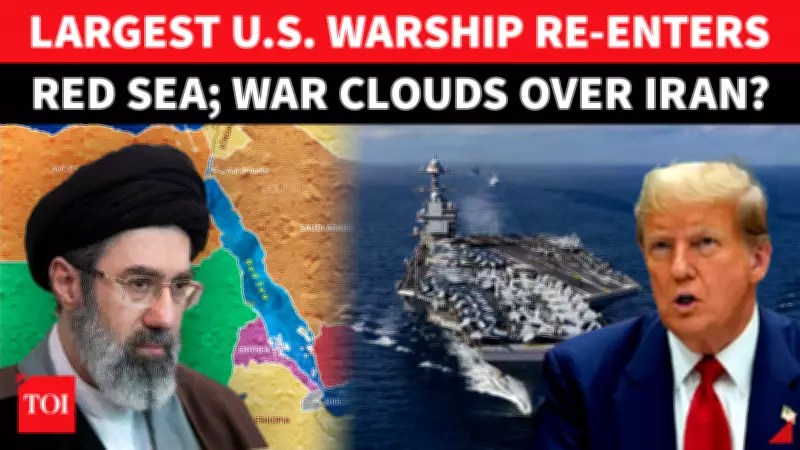
USS Gerald R. Ford Deployed to Middle East as US Ramps Up Military Presence
The United States has significantly increased its military footprint in the Middle East with the deployment of the USS Gerald R. Ford, the largest warship in the U.S. Navy, to the Red Sea. This strategic move comes amid escalating tensions with Iran, as the carrier strike group joins other American naval forces already operating near the Arabian Sea.
Major Show of Force in a Volatile Region
The arrival of the USS Gerald R. Ford represents a substantial show of force, with multiple U.S. carriers now positioned in and around the Middle East. This buildup has sparked growing concerns about a potential military escalation, as regional dynamics remain highly volatile. Analysts are debating whether this deployment is primarily a deterrence strategy to prevent conflict or a preparatory step for more aggressive actions.
Background and Context of the Deployment
The deployment follows a series of incidents that have heightened U.S.-Iran tensions, including recent confrontations in the Strait of Hormuz. Iranian forces, such as the IRGC Navy, have been involved in attacks on vessels, prompting warnings and emergency meetings in Washington. The U.S. has maintained a high alert status for its troops in the Gulf region, reflecting the seriousness of the situation.

Key points from the deployment include:
- The USS Gerald R. Ford is part of a carrier strike group enhancing U.S. naval capabilities in the Red Sea and Arabian Sea.
- This move aligns with broader U.S. military strategies in the Middle East, aimed at countering Iranian influence and ensuring maritime security.
- Concerns are mounting over the potential for miscalculations or provocations that could lead to a larger conflict, given the history of tensions in the area.
International Reactions and Implications
The deployment has drawn attention from global observers, with implications for international trade and security. The Strait of Hormuz, a critical chokepoint for oil shipments, remains a flashpoint, and any escalation could disrupt global energy markets. Additionally, political figures in the U.S. and abroad have commented on the situation, with some predicting further instability if diplomatic efforts fail.
As the situation develops, the world watches closely to see if this military buildup will de-escalate tensions or pave the way for more confrontational actions in the Middle East.






