

Beyond Oil: The Hidden Water Crisis in the U.S.-Israel-Iran Conflict
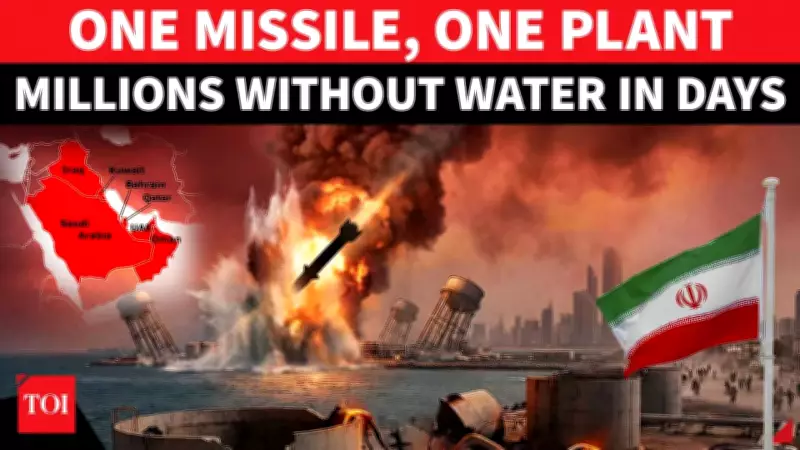
While global attention remains fixated on oil prices and tanker routes amid the escalating U.S.-Israel-Iran conflict, a far more immediate and devastating threat is emerging: the vulnerability of water infrastructure. Across the Arabian Gulf, cities such as Dubai, Kuwait City, and Manama depend almost entirely on desalinated seawater for their survival. Over 400 coastal desalination plants convert seawater into drinking water, sustaining tens of millions of residents. Without these critical facilities, taps could run dry within days, triggering a humanitarian disaster that no oil reserve can mitigate.
Strikes Near Desalination Facilities Raise Alarms
Recent military strikes have already occurred in proximity to major desalination plants in the United Arab Emirates, Bahrain, and Oman. Both Iran and the United States have exchanged accusations, each blaming the other for targeting water infrastructure. This dangerous escalation highlights how desalination plants, once considered civilian assets, are now potential military targets in the conflict. The situation underscores a grim reality: water security is becoming a casualty of geopolitical tensions.
Experts Warn of Catastrophic Consequences
Security and humanitarian experts are issuing urgent warnings. If desalination plants are deemed legitimate targets in the warfare, the Gulf region faces a catastrophic scenario. Millions could be left without access to clean water, leading to severe health crises, social unrest, and mass displacement. The reliance on desalination is so profound that alternative water sources are limited, making the plants indispensable for daily life and economic stability.

The implications extend beyond immediate humanitarian concerns. Disruption to water supplies could cripple urban centers, halt industries, and exacerbate regional instability. Unlike oil, which has global markets and reserves, water is a localized necessity with few short-term substitutes. This makes the targeting of desalination plants a particularly effective and devastating strategy in asymmetric warfare.
A Broader Regional and Global Impact
The conflict's focus on water infrastructure signals a shift in military tactics, where essential civilian resources are leveraged for strategic advantage. This development poses significant challenges for international law and humanitarian efforts, as protecting water access becomes paramount. The Gulf region's experience serves as a stark reminder of how modern conflicts can exploit environmental and resource vulnerabilities, with ripple effects felt globally through disrupted trade and heightened geopolitical tensions.
In summary, while oil markets capture headlines, the real and present danger in the U.S.-Israel-Iran war lies in the threat to water security. Safeguarding desalination plants is not just a regional priority but a global imperative to prevent a humanitarian catastrophe of unprecedented scale.






