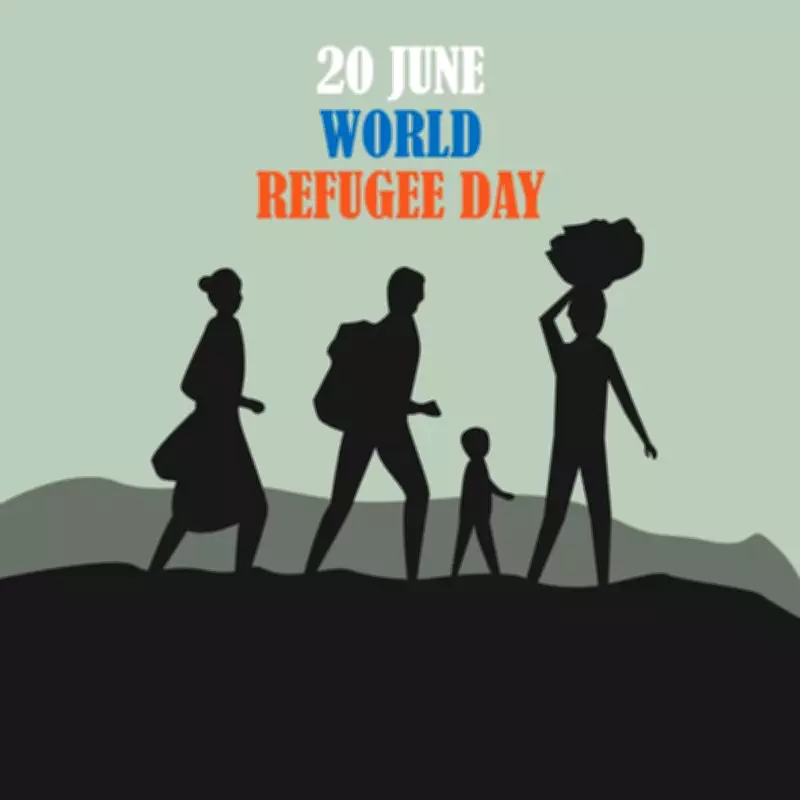
Every year on June 20, the world observes World Refugee Day to honor the courage and resilience of millions forced to flee their homes. This year, the numbers released by the United Nations are staggering: 123.2 million people are currently displaced worldwide — nearly one in every 67 people on Earth. It is the highest figure ever recorded.
Behind every statistic lies a story of loss, uncertainty and survival. Yet the refugee crisis is no longer only about people escaping wars. Increasingly, displacement has become a defining feature of the modern world, driven by a complex mix of conflict, climate change, environmental degradation and development policies. Understanding these causes is essential not only for policymakers but also for students preparing for competitive examinations and citizens concerned about global stability.
Beyond War: Understanding Modern Displacement
Traditionally, refugees have been associated with armed conflicts. Countries such as Sudan, Syria, Afghanistan and Ukraine continue to produce millions of displaced people due to violence and political instability. However, conflict alone cannot explain the unprecedented scale of human displacement witnessed today.

A deeper examination reveals structural factors at work. Economic inequalities, weak governance, environmental stress and unsustainable development models often combine to push communities into situations where migration becomes inevitable. Displacement is increasingly a symptom of broader systemic failures rather than isolated emergencies.
Climate Change: The Emerging Driver
One of the fastest-growing causes of displacement is climate change. Rising sea levels, prolonged droughts, floods, cyclones and desertification are making many regions increasingly difficult to inhabit. The World Bank estimates that climate change could internally displace more than 200 million people by 2050. Unlike conflict-induced migration, climate displacement often unfolds gradually. Families may leave not because of a single disaster but because livelihoods become impossible to sustain over time.
The challenge is particularly significant because international law does not formally recognize 'climate refugees'. As a result, millions displaced by environmental factors often remain outside existing protection frameworks.
India's Climate Vulnerability
India offers a striking example of climate-related displacement. The Sundarbans, one of the world's largest mangrove ecosystems, are facing severe threats from rising sea levels and coastal erosion. Several inhabited islands have already disappeared beneath the sea, forcing residents to relocate. Riverbank erosion in states such as West Bengal and Assam, recurrent flooding in Bihar, and extreme weather events across the Himalayan region continue to uproot thousands of families every year. The 2023 Teesta Glacial Lake Outburst Flood in Sikkim highlighted how climate-related disasters can suddenly devastate entire communities.
For civil services aspirants, these developments underline the growing importance of climate adaptation, disaster management and environmental governance in public policy.
Development and the Hidden Cost of Progress
Another often overlooked cause of displacement is development itself. Since Independence, millions of Indians have been displaced by large infrastructure projects including dams, highways, mining operations, industrial corridors and urban expansion. The Narmada Valley Development Project remains one of the most cited examples of development-induced displacement. While such projects contribute to economic growth and public welfare, they also raise critical questions about rehabilitation, compensation and social justice.
The issue highlights a fundamental policy dilemma: how can societies pursue development while ensuring that vulnerable communities do not bear a disproportionate share of its costs?

The Unequal Geography of Refuge
An important but less discussed aspect of the refugee crisis is where displaced people seek shelter. Contrary to popular perception, most refugees are not hosted by wealthy countries. More than 70 percent are accommodated by low- and middle-income nations that often face economic constraints of their own. This creates a paradox: countries that have contributed least to global emissions, geopolitical conflicts or economic inequalities frequently shoulder the greatest humanitarian burden. The situation raises questions of international responsibility, burden-sharing and global justice.
The Psychological Dimension of Displacement
Displacement is not merely a physical movement from one place to another. It also affects identity, belonging and mental well-being. Many communities today live under the constant fear that environmental or economic pressures may force them to leave in the future. This phenomenon, often described as anticipatory displacement, creates anxiety and uncertainty even before migration occurs. For populations facing rising seas, shrinking water resources or repeated disasters, displacement is no longer a temporary disruption but an enduring possibility that shapes everyday life.
Rethinking Global Responses
The international mechanisms designed to address displacement are struggling to keep pace with contemporary realities. Existing legal frameworks were largely developed in the aftermath of the Second World War and focus primarily on persecution and conflict. Today's challenges require broader solutions. Climate resilience, sustainable development, disaster preparedness, social protection and international cooperation must become central components of refugee policy. Equally important is addressing the root causes that force people to leave their homes in the first place.
A Challenge That Concerns Everyone
World Refugee Day is not only about recognizing the resilience of displaced people. It is also an opportunity to reflect on the systems that continue to generate displacement on an unprecedented scale. The record figure of 123.2 million displaced persons is a warning signal for humanity. If climate change intensifies, conflicts persist and development remains unequal, the number will continue to rise. The real challenge, therefore, is not simply how to assist refugees after they are displaced, but how to build a world where fewer people are forced to leave their homes at all. The future of human security depends on answering that question.
Practice Questions
Question 1 (GS Paper II – Governance & International Relations)
"The refugee crisis in the 21st century is increasingly driven by factors beyond armed conflict." Discuss the emerging causes of displacement and evaluate the adequacy of existing international frameworks in addressing them. (250 words, 15 marks)
Question 2 (GS Paper III – Environment & Development)
"Climate change and development-induced displacement are reshaping the geography of human settlements." Examine the challenges posed by such displacement in India and suggest policy measures to ensure climate justice and inclusive development. (250 words, 15 marks)
For advanced practice (Essay/GS-I):
"Displacement is not merely the loss of a home; it is the loss of identity, livelihood and future." Critically examine this statement in the context of contemporary global and Indian realities. (Essay/1500 words)
The writer is Senior Assistant Professor and Assistant Dean, School of Liberal Studies, BML Munjal University.