

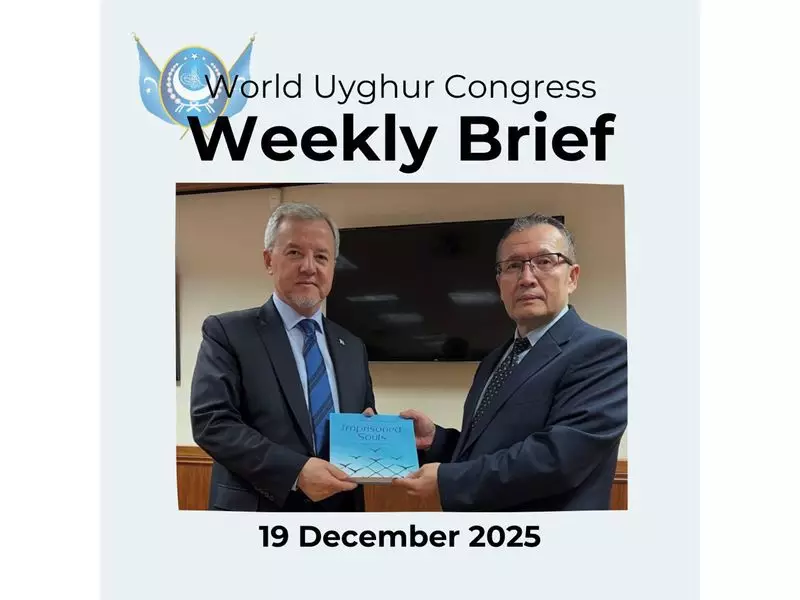
The World Uyghur Congress (WUC) has significantly escalated its international advocacy efforts, bringing renewed and urgent focus to the critical human rights situation facing the Uyghur community in China's Xinjiang region. The organization is actively mobilizing global policymakers and the public to address what it describes as severe and systematic repression.
Intensified Global Advocacy and Key Demands
Under the leadership of its president, Dolkun Isa, the WUC is pursuing a multi-pronged strategy on the world stage. The congress is not only raising awareness but also pressing for concrete diplomatic and legislative actions from nations worldwide. A central pillar of their campaign is the call for governments to officially recognize the treatment of Uyghurs as meeting the legal definition of genocide and crimes against humanity.
The advocacy work extends to influential international bodies. The WUC is actively engaging with the United Nations and its relevant human rights mechanisms, submitting detailed reports and testimonies. Furthermore, the organization is urging for the implementation of targeted sanctions, such as Magnitsky-style sanctions, against Chinese officials and entities believed to be directly involved in the alleged abuses. This approach aims to impose tangible consequences and deter further violations.

Documenting the Human Rights Crisis
The WUC's advocacy is grounded in a body of evidence detailing widespread rights violations. The organization highlights several key areas of concern that form the core of its urgent appeals to the global community.
Mass internment camps remain a primary focus, with the WUC asserting that over a million Uyghurs and other Turkic Muslims have been arbitrarily detained in what Chinese authorities label "vocational education and training centers." Reports from former detainees describe conditions involving political indoctrination, forced labor, and torture.
Beyond the camps, the WUC documents a campaign of systematic surveillance and control. This includes the pervasive use of advanced technology for facial recognition and DNA collection, the destruction of cultural and religious sites like mosques and cemeteries, and state-enforced family separation. The organization also emphasizes the coercive population control measures, including forced sterilizations and abortions, aimed at suppressing Uyghur birth rates.
International Response and the Path Forward
The relentless advocacy by the WUC and other groups has begun to shape a growing international response. Several national parliaments, including those of the United States, Canada, the Netherlands, and the United Kingdom, have passed resolutions or made declarations recognizing the situation as genocide. The United Nations High Commissioner for Human Rights has also released a report acknowledging possible crimes against humanity.
Despite these steps, the WUC argues that the international reaction has been inconsistent and largely insufficient to alter China's policies. The organization stresses that global economic interests and geopolitical considerations often overshadow human rights imperatives. Looking ahead, the WUC vows to continue its campaign, aiming to secure more unified and forceful action from democratic nations. This includes pushing for a coordinated international investigation, broader sanctions, and support for Uyghur diaspora communities. The congress positions the Uyghur issue not merely as a bilateral concern but as a fundamental test for the global human rights framework and the rules-based international order.
The World Uyghur Congress stands firm in its resolve, stating that the time for equivocation is over. It calls upon the world to move beyond statements of concern and take decisive steps to hold perpetrators accountable and protect the vulnerable Uyghur population from further harm.






