

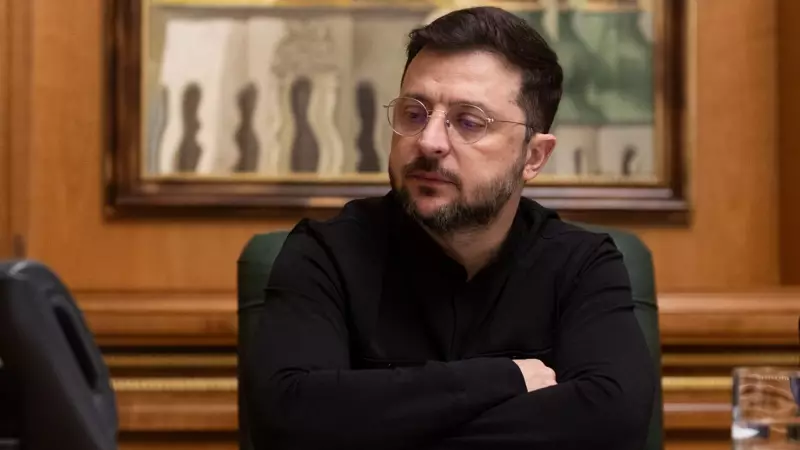
Ukrainian President Volodymyr Zelenskyy has announced significant progress in high-level discussions concerning a United States-proposed peace plan aimed at ending the ongoing war with Russia. This development comes amidst continued diplomatic efforts to find a sustainable resolution to the conflict that has ravaged Eastern Europe for over two years.
Diplomatic Momentum on a US-Backed Framework
President Zelenskyy revealed the advancement in talks during a press conference in Kyiv on Sunday. He indicated that the negotiations are centered around a comprehensive peace formula initially presented by Washington. The discussions involved Ukraine's Chief of Staff, Andriy Yermak, and US National Security Adviser, Jake Sullivan, highlighting the high-stakes nature of the dialogue.
While Zelenskyy did not divulge the intricate details of the proposed plan, he emphasized that the talks are moving in a positive direction. "There are specific proposals. They are being discussed," the President stated, underscoring the concrete nature of the ongoing negotiations. This marks a potentially crucial step forward, as establishing a mutually agreeable framework has been a persistent challenge since the invasion began in February 2022.

The Core Elements of the Peace Formula
The US peace initiative is understood to be built upon a foundation of several key principles. Reports suggest it is structured as a 10-point plan designed to address the root causes and consequences of the war. Central to this formula is the imperative of ensuring the complete withdrawal of Russian military forces from all internationally recognized Ukrainian territory.
Other critical components likely include guarantees for Ukraine's future security and sovereignty, mechanisms for justice and accountability for war crimes, and provisions for reconstruction. The plan seeks to create a durable peace that prevents future aggression, a point Zelenskyy has consistently stressed as non-negotiable for Kyiv.
Challenges and the Path Forward
Despite the reported progress, immense hurdles remain. Russia has not publicly engaged with this specific US-backed proposal, and its previous demands have been largely unacceptable to Ukraine and its Western allies. The Kremlin has historically insisted on recognizing its annexation of Ukrainian regions and guarantees of Ukrainian neutrality, conditions Kyiv firmly rejects.
The success of any peace plan ultimately hinges on direct or indirect negotiations between the warring parties. The current talks, while promising, appear to be in the preliminary stages of aligning Ukraine and its key allies on a unified approach. The involvement of US National Security Adviser Jake Sullivan signals Washington's deep commitment to shaping a viable diplomatic off-ramp.
President Zelenskyy's announcement serves multiple purposes: it reassures the Ukrainian public and international partners of active diplomatic efforts, maintains pressure on Russia by showcasing Western unity, and potentially tests Moscow's receptiveness to a serious negotiation track. The coming weeks will be critical in determining whether this progress can be translated into a formal proposal that reaches the negotiation table.
The global community watches closely, as a negotiated settlement remains the most desired outcome to a conflict with severe humanitarian and economic repercussions worldwide. The reported advancement in talks on the US peace plan offers a fragile but important glimpse of hope in a prolonged and devastating war.






