European Union leaders have convened for a critical summit in Brussels to determine a controversial plan: whether to use billions in frozen Russian state assets to fund Ukraine's urgent defence and civilian needs. The high-stakes meeting, held on Thursday, centres on a proposal to leverage roughly €210 billion of immobilised Russian sovereign funds, primarily held in Belgium, as the war enters a pivotal phase.
The Core Proposal: A "Reparations Loan" Against Frozen Funds
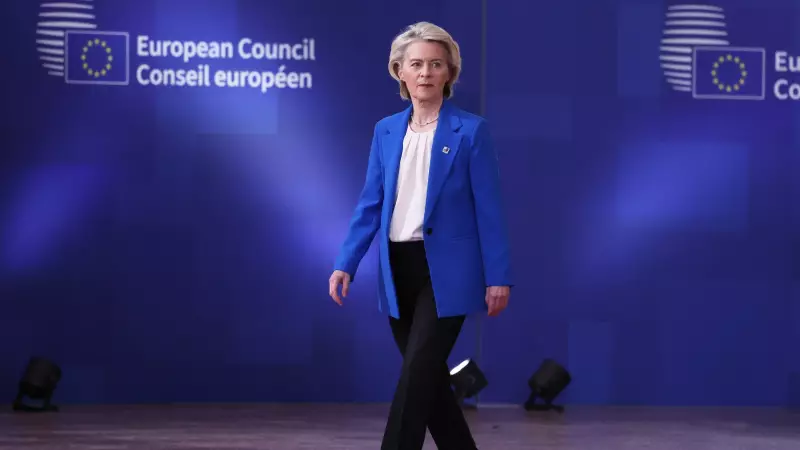
Facing unprecedented pressure from the United States and Ukraine's escalating battlefield requirements, the European Commission, led by President Ursula von der Leyen, has put forward a novel financial mechanism. Instead of outright confiscation, which many fear would set a dangerous legal precedent, the plan involves issuing bonds backed by the value of the frozen Russian assets.
The proceeds from these bonds would then be channelled to Kyiv. This structure, termed a "reparations loan," has a critical condition: Ukraine would only be obligated to repay the EU if and when Russia eventually pays war reparations. This approach aims to provide immediate financial support to Ukraine while navigating the complex legal minefield of sovereign asset seizure.

Speaking forcefully in the European Parliament ahead of the summit, President von der Leyen framed the decision as fundamental to European security. "There is no more important act of European defence than supporting Ukraine’s defence," she stated, adding that "the next days will be crucial in securing this." She emphasised that in a "dangerous and transactional" world, bolstering Europe's own security is no longer an option but a necessity.
Deep Divisions Within the EU Bloc
The proposal, however, has exposed significant rifts among the 27 member states, highlighting concerns over legal solidity and financial risk.
Belgium, which hosts the bulk of the frozen assets through the Euroclear securities depository, has expressed serious reservations. Belgian officials are reportedly worried about insufficient guarantees from other EU nations should the complex financial scheme fail, potentially leaving Brussels saddled with a multibillion-euro debt.
Italy has emerged as a vocal sceptic, aligning with Belgium's caution. Prime Minister Giorgia Meloni argued that using the frozen assets without an ironclad legal foundation would hand Moscow a propaganda victory. "Italy, of course, considers sacred the principle that Russia should primarily pay for the reconstruction of the nation it attacked, but this result must be achieved with a solid legal basis," Meloni told Italian lawmakers. Both Italy and Belgium favour alternative EU joint borrowing as a safer method.
Germany appears more supportive of finding a way to utilise the assets. Chancellor Friedrich Merz indicated he would push to make up to €90 billion available for Ukraine's defence, though he cautiously rated the chances of an agreement at "50/50."
The most staunch opposition comes from Hungary, whose government maintains a Kremlin-friendly stance. Budapest has promised to veto any plan that uses the common EU budget as collateral for a Ukraine loan. This threat makes the "reparations loan" option more viable, as it would require only a qualified majority vote rather than the unanimity needed for budget-related measures.
Legal Battles and Escalating Tensions
The financial manoeuvring occurs against a backdrop of escalating legal and diplomatic conflict. The Russian central bank has already initiated a lawsuit seeking $230 billion in damages from Euroclear. Moscow has consistently labelled any plan to divert its frozen funds as "theft" and vowed retaliation.
In a pre-emptive move last week, the EU used emergency powers to indefinitely freeze the €210 billion in Russian assets within the bloc. This action neutralises the risk of losing control over the funds if a member state like Hungary vetoes the routine six-month renewal of sanctions.

To date, the EU has already sent €1.5 billion to Ukraine in 2024 using extraordinary revenues generated from the frozen Russian Central Bank assets. The current summit decision represents a quantum leap from using just the interest to potentially leveraging the entire principal sum, marking a watershed moment in Western financial strategy against Russia.
The outcome of the Brussels summit will not only shape Ukraine's immediate capacity to defend itself but also redefine the boundaries of economic statecraft and international law in an era of renewed great-power conflict.