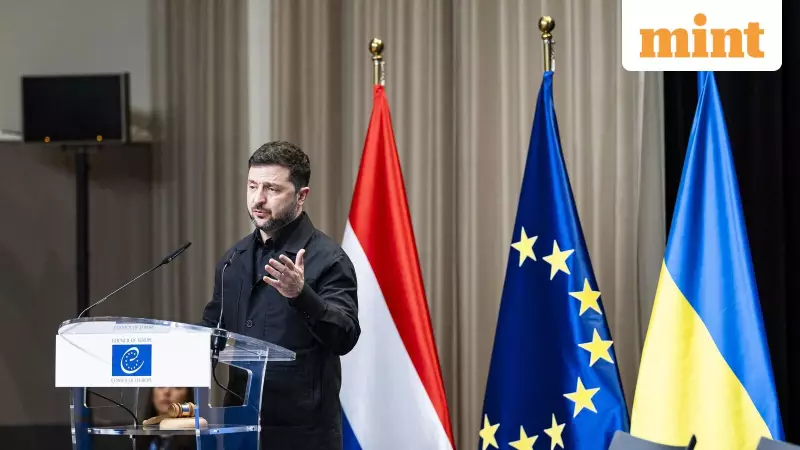
For European allies standing with Ukraine, the prospect of a peace settlement that tilts in Moscow's favour is viewed not as a relief, but as a direct threat to their own security. As the conflict approaches its fifth year, a fundamental trans-Atlantic divide is emerging, with European capitals driven by a core motive of self-preservation.
Self-Interest at the Heart of European Support
While European leaders publicly frame their support for Kyiv as a defence of democracy and international law, a deeper, more pragmatic agenda is at work. The prevailing fear in Europe is that a peace deal which leaves Russia strengthened and Ukraine vulnerable would not end the threat, but merely postpone a wider, more devastating war that could engulf the continent.
European officials argue that Russia could emerge from negotiations with vastly expanded military capacity, confident in its ability to redraw borders by force, and perceiving NATO as weak. In such a scenario, cash-strapped European nations believe they would be forced into a frantic and massively expensive surge in military spending and defensive preparations to rebuild deterrence.

"The future of Ukraine is closely linked with our own," German Defence Minister Boris Pistorius stated on Tuesday. "If we cannot achieve lasting and just peace for Ukraine, we will not have any guarantee for our own security either."
A Trans-Atlantic Rift Over Strategy
This European stance creates a significant rupture with the approach of the Trump administration in the United States. The U.S. has pushed for a quick settlement to the war, aiming for what it terms "strategic stability with Russia," which it believes would reduce the risk of escalation. American officials have also hinted at potential business opportunities with Moscow post-deal.
Europe and Ukraine, however, see Russia as a long-term strategic threat. They insist that any trust must be painstakingly earned and verified, and until that point, Moscow must be contained through robust deterrence. This clash was evident in recent U.S.-led peace talks, straining volatile relations. A recent U.S. national security document even accused Europeans of harbouring "unrealistic expectations" about the war.
European leaders have privately cautioned Ukrainian President Volodymyr Zelensky against making significant concessions in talks with the U.S. without ironclad guarantees of what Washington would do if Russia broke a future deal. French President Emmanuel Macron crystallised the sentiment last month, stating, "We want peace. But not a peace that is in reality a capitulation." He described a bad deal as one that "gives Russia all the freedom to continue to go further" and endanger Europe.
The High-Stakes Test of Frozen Assets
The immediate test of European resolve comes this week in Brussels. EU leaders are set to decide on a monumental proposal: using frozen Russian sovereign assets to fund a $105 billion loan to Ukraine. This loan aims to cover two-thirds of Kyiv's budget and military needs for the next two years.
This decision is critical because, with the Trump administration having ended almost all U.S. financial aid, Ukraine is projected to run out of cash by spring without this European lifeline. That would leave Kyiv with severely diminished leverage in any negotiations. The Trump administration has expressed a desire to use some of these frozen funds for future U.S.-Russian economic projects, adding another layer of tension.
Analysts stress the funds are vital regardless of the diplomatic path. "If the guns fall silent, these funds will be crucial for restarting the war-torn economy," said Jana Kobzova of the European Council on Foreign Relations. "If Putin rejects a deal and grinds on with his invasion, the cash will help underpin Ukraine’s self-defense."

The overarching European fear was summarised in a recent survey of 500 security specialists, which ranked "a cease-fire favourable to Russia" as a top risk to the EU. The report warned that such a deal would lock in Russian territorial gains, reward aggression, and signal that the EU cannot shape its own security environment. As NATO Secretary-General Mark Rutte warned, a scenario where Putin prevails would mean Russian forces pressing against a longer NATO border, forcing the alliance into a financially painful military acceleration. For Europe, Ukraine's security is now inextricably linked to its own.