

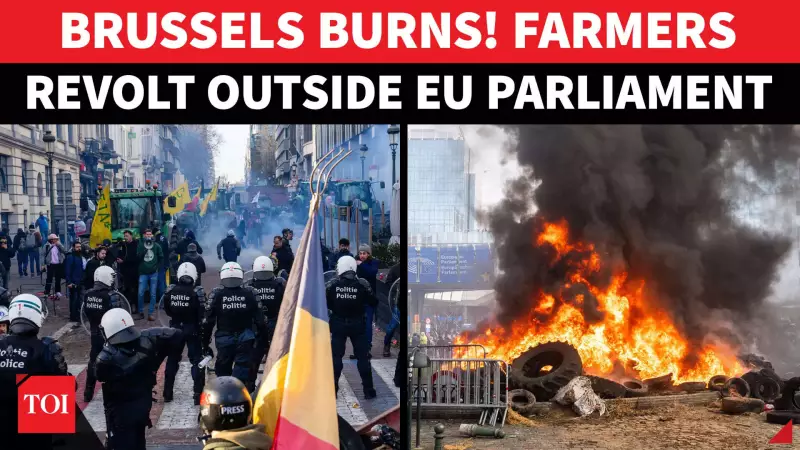
Chaos and fury gripped the heart of Europe on December 18, 2025, as a massive protest by thousands of European farmers turned the streets of Brussels into a battleground. The demonstrations, marked by burning coffins and projectiles, coincided with one of the most critical European Union summits in recent years, creating a stark contrast between the fiery discontent outside and the high-stakes debates inside.
Streets in Flames, Summit Under Pressure
The protest was not a spontaneous outburst but a calculated display of anger timed to disrupt the EU leaders' meeting. Farmers used their tractors to blockade key roads around the summit venue, creating logistical nightmares. Police responded with water cannons in attempts to disperse the crowds, but the scene remained tense and volatile for hours.
At the core of the farmers' rage are two pivotal issues being discussed by the EU leadership. The first is the controversial proposal to unlock frozen Russian assets to fund Ukraine's war effort against Russia's invasion. The second, and the primary trigger for the agricultural community, is the long-pending EU-Mercosur free-trade agreement.

Why Farmers Are Furious: Mercosur and Subsidies
European agricultural unions have issued stark warnings about the Mercosur deal. They argue that opening the EU market to cheaper agricultural imports from South American nations like Brazil and Argentina would lead to unfair competition and devastate local farming livelihoods. Their fears are compounded by concerns over impending carbon taxes and potential cuts to vital EU farm subsidies, which they see as a double blow to their economic survival.
The anger reached a boiling point when European Commission President Ursula von der Leyen and European Council President António Costa decided to delay the summit proceedings to hold talks with farm union leaders. While intended as a conciliatory gesture, this move was perceived by some officials within the summit as "disrespectful" to the other heads of state and the urgent agenda at hand, further highlighting the deep divisions.
A Divided Europe and Global Implications
The protests outside mirrored the fissures inside the summit chambers. Major EU nations like France and Italy have voiced strong opposition to the Mercosur trade pact, aligning with the protesters' demands. This internal discord, set against the backdrop of raging demonstrations, places the future of the deal in serious jeopardy.
Brussels has thus become the epicentre of a perfect political storm. The summit's dual agenda ties together Europe's immediate response to the war in Ukraine with its long-term strategic and economic future. The decisions made—or deferred—amidst this chaos have the potential to reshape the EU's role on the global stage, determining its stance on trade, security, and internal solidarity.
The images of burning coffins and tractors facing water cannons in the EU's capital are a powerful symbol of the intense pressure facing European leaders. They must now navigate between supporting a war-torn ally, securing a contested trade future, and addressing the very real economic anxieties of their own citizens.

