

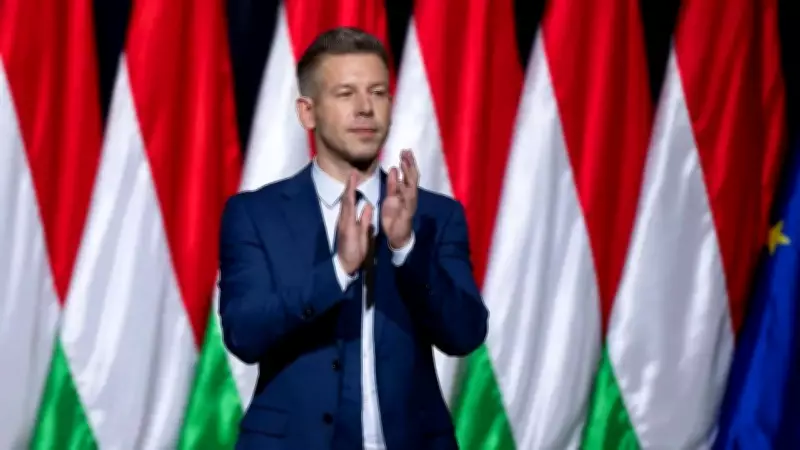
Hungary's Orban Concedes Defeat After 16 Years as Pro-EU Rival Magyar Wins Landslide
Viktor Orban, the European Union's longest-serving leader, conceded defeat on Sunday after an extraordinary 16-year tenure in power, as Hungarians turned out in unprecedented numbers to vote for a pro-European course spearheaded by his centre-right rival, Peter Magyar.
With more than 98% of votes meticulously counted, Magyar's Tisza party is projected to secure an impressive 137 seats in the 199-member parliament. This constitutes a crucial two-thirds majority that will empower the incoming government to systematically reverse Orban's controversial reforms and undertake a comprehensive rewrite of the constitution.
"The election results are not final yet, but the situation is understandable and clear," Orban stated solemnly at Fidesz campaign offices, where emotional supporters wept as they watched his address on television screens. "The election result is painful for us, but clear."

Record Turnout Signals Watershed Moment
Election officials estimated turnout at a historic 79% or higher, in an election that countless Hungarians perceived as a definitive watershed moment for their nation's future trajectory and democratic identity.
Who is Peter Magyar?
Just two years ago, Peter Magyar was a virtually unknown, behind-the-scenes figure within Orban's Fidesz party apparatus. On Sunday, he dramatically transformed into the political figure who conclusively ended the Orban era.
Magyar studied law at a prominent Catholic university in Budapest and joined Fidesz shortly after the party lost power in 2002. For over two decades, he functioned as a significant yet low-profile operative inside the party, until 2024, when he publicly severed ties with Fidesz following a high-profile sex abuse scandal that compelled his ex-wife, Hungary's former justice minister, to resign.
Magyar insists he never intended to become a mainstream political figure. However, driven by profound concerns over what he identified as systemic corruption and anti-democratic policies, he courageously launched a new political movement under the Tisza banner to directly challenge Fidesz – despite sharing some of its foundational conservative leanings.
Over the last two intensive years, he meticulously built a broad and diverse support base by tirelessly touring the small towns and villages where Fidesz had traditionally dominated, delivering up to seven impassioned speeches daily. On Sunday, that relentless grassroots campaign culminated in a stunning landslide victory.
Victory Speech Promises Reconciliation and Restoration
In his triumphant victory speech before a massive, euphoric crowd in Budapest, Magyar struck a notably reconciliatory tone while firmly vowing to restore Hungarian democracy to its core principles.
"Tisza did not just win the election, all signs point to a strong two-thirds majority at the National Assembly. This means a peaceful, efficient transfer of power," he declared authoritatively.
"Together, we liberated Hungary and got rid of the Orban regime," he added emphatically, as the energized crowd chanted "Ria-Ria-Hungaria" and "Russians go home" in a powerful display of national sentiment.
Why Did Orban Lose?
Orban, who first ascended to the prime ministership in 1998 at the youthful age of 35, had dominated Hungarian politics with an iron grip for nearly two decades. He secured sweeping election victories in 2010, 2014, 2018, and 2022, utilizing his consecutive two-thirds majorities to fundamentally rewrite Hungary's constitution and enact laws aimed at establishing what he controversially termed an "illiberal democracy."
His aggressive consolidation of executive power, stringent curbs on NGO activities and media freedoms, and systematic weakening of judicial independence precipitated repeated clashes with the European Union, which ultimately suspended billions of euros in crucial funding for Hungary.
Hungary endured the EU's most severe inflationary surge following Russia's full-scale invasion of Ukraine in 2022. While food prices escalated to near EU average levels, Hungarian wages stubbornly remained the third-lowest within the 27-member bloc, exacerbating public discontent.

Orban framed the election as a stark choice between "war or peace," insinuating that a Tisza government would recklessly drag Hungary into neighboring Ukraine's devastating conflict. However, opinion polls revealed that Hungarian voters were no longer sufficiently fearful of being drawn into the war; the number of Hungarians who feared the country could be dragged into the conflict had halved in recent years.
Despite implementing generous pro-family policies, Orban appeared to have decisively lost the support of younger voters as he lurched further to the political right. "I know young people like to turn against their parents and this can cause political problems," Orban remarked during the campaign, a statement that may have further alienated this critical demographic.
What It Means for Hungary and Europe
Magyar's seismic victory will have profound and far-reaching implications not only for Hungary's domestic landscape but for the European Union, Ukraine, and the broader international order.
Orban's ouster is widely expected to terminate Hungary's adversarial and obstructive role within the EU, potentially paving the way for the approval of a substantial 90 billion-euro ($105 billion) loan to war-battered Ukraine that Orban had persistently blocked. Ukrainian President Volodymyr Zelensky warmly welcomed Magyar's victory, characterizing it as a "resounding victory" for a "constructive approach" to European solidarity.
European leaders swiftly extended congratulations to Magyar. "Hungary has chosen Europe. Europe has always chosen Hungary," affirmed European Commission President Ursula von der Leyen. German Chancellor Friedrich Merz expressed his eagerness to collaborate with Magyar "toward a strong, secure, and above all united Europe."
Orban had functioned as Vladimir Putin's principal ally within the EU, a staunchly pro-Moscow leader who consistently opposed further sanctions against Russia, resisted additional assistance for Ukraine, and obstructed Ukraine's path to EU membership. "This is clearly bad news for Vladimir Putin, very bad news," analyzed BBC Russia editor Steve Rosenberg.
Magyar's commanding two-thirds majority will also enable him to systematically reverse Orban's most controversial reforms, restore the independence of the judiciary, aggressively combat deep-seated corruption, and unlock billions in suspended EU funds that are vital for Hungary's economy. "The puppets of the Orban government must go and the institutions of the state have to change," Magyar vowed resolutely.
A Historic Night in Budapest
As the conclusive results became irrefutably clear, opposition supporters flooded the streets of Budapest in a spontaneous celebration, waving Hungarian and EU flags triumphantly, setting off vibrant flares, and dancing joyously to music.
"I'm finally proud to be Hungarian," one elated woman told the BBC, capturing the national mood.
"It feels like this is our first and last chance in a really long time to actually change the system," said 24-year-old Dorina Nyul, who attended Tisza's electrifying election night event. "I can't even describe the feeling."
Orban, meanwhile, confronts an uncertain future leading his party from the opposition benches for the first time since 2010.
"What tonight's election result means for the fate of our country and nation remains unclear," Orban told his subdued supporters. "We do not know it yet. Time will tell. But however it has turned out, we will keep serving our country and the Hungarian nation from opposition."
