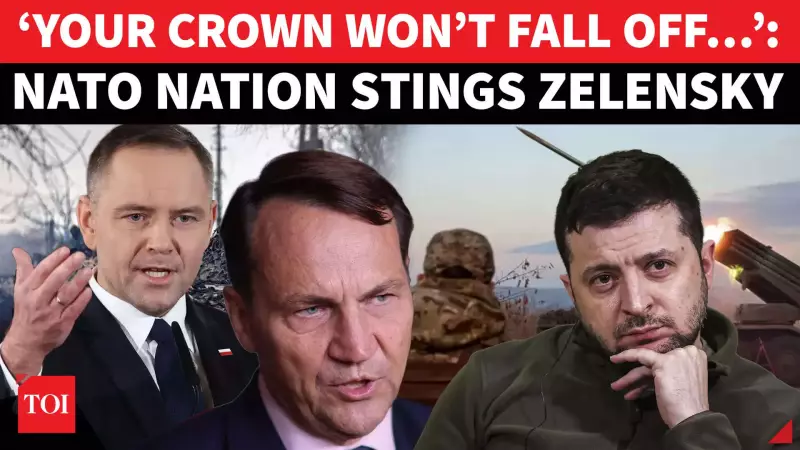
A significant diplomatic crisis has erupted between two key European allies, Poland and Ukraine, following sharp public comments from Polish leaders directed at Ukrainian President Volodymyr Zelensky. The tensions spiked after Zelensky reportedly skipped a planned visit to Poland, leading to accusations of ingratitude from Warsaw.
The 'Crown Won't Fall Off' Remark and Accusations of Ingratitude
The core of the dispute revolves around public statements made by Poland's top officials. Polish Foreign Minister Radoslaw Sikorski delivered a pointed and dramatic jab at President Zelensky, suggesting the Ukrainian leader's "crown won't fall off" if he showed more appreciation. This metaphorical jibe implies that acknowledging Poland's support would not diminish Zelensky's stature.
Echoing this sentiment, Polish President Karol Nawrocki directly accused the leadership in Kyiv of being "ungrateful." This criticism comes despite Poland's role as one of Ukraine's most steadfast supporters since the beginning of the war with Russia. Poland has provided massive military, humanitarian, and political aid and served as a crucial logistical hub for Western assistance.

Background: The Snub That Fueled the Fire
The immediate trigger for this diplomatic storm was President Zelensky's decision to skip a planned visit to Poland. While the exact reasons for this change in schedule were not detailed in the initial reports, the perceived snub was taken seriously in Warsaw. For Polish leaders, who have championed Ukraine's cause domestically and internationally, the absence was seen as a lack of diplomatic courtesy and recognition for their nation's sacrifices and unwavering support.
The public nature of the criticism from figures like Sikorski and Nawrocki marks a significant and unusual escalation in tensions between the two nations, who have historically been close partners, especially since Russia's full-scale invasion in 2022.
Potential Consequences for Regional Unity
This public rift has several potential implications for regional security and Western unity against Russian aggression.
Firstly, it exposes underlying strains that can develop even between close allies during a prolonged conflict. Issues like economic competition from Ukrainian agricultural imports and political fatigue can simmer beneath the surface of military support.
Secondly, it risks providing propaganda ammunition to Moscow, which has long sought to exploit divisions within NATO and the European Union. A public dispute between Ukraine and a leading Eastern European ally is a narrative Russia is likely to amplify.
Finally, it underscores the complex diplomatic balancing act Ukraine must maintain with all its backers. While focused on its existential war effort, managing relationships with supportive but sometimes frustrated partners remains a critical challenge for Kyiv's diplomacy.
The situation remains fluid, and much will depend on whether both sides can engage in private diplomacy to mend fences. The core strategic alignment against Russia remains, but this incident highlights that political relationships require constant maintenance, even in times of war. The coming days will reveal if this is a temporary spat or a sign of deeper, more lasting friction.