

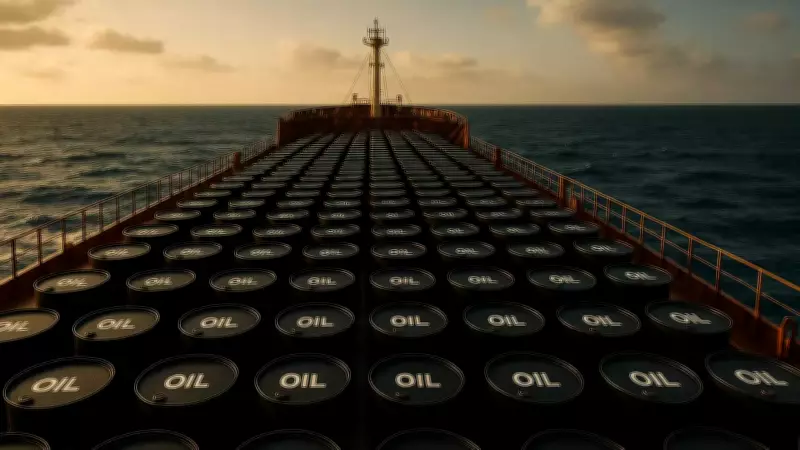
Middle East Tensions Escalate, Threatening Asia's Critical Energy Supply Routes
Rising hostilities between Israel, the United States, and Iran have intensified fears of a potential closure of the Strait of Hormuz, a vital maritime chokepoint for global energy shipments. Recent developments, including Israeli strikes on Hezbollah targets in Beirut and unverified claims by Iranian media about a downed US F-15 in Kuwait, have heightened regional instability. Gulf nations have vowed to defend themselves, while explosions reported in Bahrain, Dubai, and Doha underscore the volatile situation.
Asia's Heavy Reliance on Middle Eastern Energy Exposes Vulnerability
The expanding conflict, triggered by Israeli and US actions against Iran, poses a severe threat to sustained oil and gas flows. Asia depends critically on energy supplies from the Middle East, making the region exceptionally vulnerable to supply disruptions. The potential closure of the Strait of Hormuz could strangle the flow of crude oil and liquefied natural gas (LNG), impacting major economies like China, Japan, India, and South Korea.
India's Growing Dependency and Strategic Reserves
India's reliance on Middle Eastern crude has surged, with imports reaching 55% of total oil purchases in January, the highest level since late 2022. This translates to approximately 2.74 million barrels per day, as Indian refiners reduced purchases of Russian crude. Oil Minister Hardeep Singh Puri recently stated that India maintains sufficient storage capacity, including strategic reserves and company stocks, to meet domestic demand for about 74 days.

Additionally, India is the world's fourth-largest LNG importer, sourcing nearly two-thirds of its requirements from Qatar, the UAE, and Oman, according to data from Kpler.
China's Position as Top Importer and Reserve Buffer
China, the largest global crude importer and a leading buyer of Iranian oil, sources about half of its crude imports from the Middle East. Last year, it imported an average of 1.38 million barrels per day of Iranian crude, accounting for roughly 13% of seaborne purchases. To mitigate supply risks, China holds substantial volumes in floating storage—around 42 million barrels in Asian waters as of late January—and has built extensive strategic petroleum reserves estimated at 900 million barrels, covering nearly three months of imports.
As the top LNG importer globally, China also relies on the Middle East for about one-third of its LNG shipments.
Japan's Extreme Dependency and Emergency Preparedness
Japan's energy security is heavily tied to the Middle East, with 95% of its crude oil imports originating from the region. Approximately 70% of these shipments pass through the Strait of Hormuz. In January, Japan imported 2.8 million barrels per day, including 1.6 million from Saudi Arabia, plus supplies from the UAE, Kuwait, and Qatar.
The country maintains emergency crude reserves sufficient for 254 days of consumption. As the second-largest LNG importer, Japan sources 40% of its LNG from Australia, with Middle Eastern producers like Qatar, Oman, and the UAE contributing 11%. Chief Cabinet Secretary Minoru Kihara noted that Japanese firms hold LNG inventories covering about three weeks of demand, with capacity to divert annual trade volumes for emergencies.
South Korea's Import Reliance and Contingency Plans
South Korea, almost entirely dependent on imported energy, procures 70% of its crude oil and 20% of its LNG from the Middle East, according to the Korea International Trade Association. The government holds strategic petroleum reserves of 100 million barrels, with the private sector adding 95 million barrels, totaling coverage for around 208 days of consumption.
In response to potential supply disruptions, South Korea's industry ministry has indicated plans to secure additional energy from alternative regions if Middle Eastern supplies are compromised.

Key Implications of a Strait of Hormuz Closure
- Global Oil Price Surge: A shutdown could push crude prices toward $100 per barrel, reminiscent of 1970s-style oil shocks.
- Supply Chain Disruptions: Sustained disruptions would force Asian nations to tap strategic reserves and seek costly alternatives.
- Economic Impact: Higher energy costs could inflate import bills and slow economic growth across Asia.
- Geopolitical Shifts: Nations may accelerate diversification efforts, reducing long-term reliance on the Middle East.
The escalating conflict underscores the fragile balance of global energy markets, with Asia's economic stability hanging in the balance as tensions threaten to sever a critical supply artery.





