

The global billionaire landscape continues to evolve dramatically as business environments shift and economic conditions fluctuate worldwide. According to the latest data from World Population Review for 2026, there are more than 2,600 billionaires across the globe, with their numbers showing significant volatility in recent years. The billionaire population experienced a sharp decline during the 2020 pandemic, rebounded strongly in 2021, faced another downturn in 2023, and has now stabilized in 2024 and beyond.
Global Billionaire Distribution Patterns
The distribution of billionaires by country serves as a crucial indicator of economic strength and development trajectories across different regions. Currently, over one-third of the world's billionaires reside in the United States, firmly establishing the nation as the undisputed leader in billionaire concentration. China follows as the second-largest hub of ultra-wealthy individuals, while India has secured the third position in this exclusive global ranking.
Top 10 Countries with Maximum Billionaires in 2026
World Population Review's comprehensive analysis for 2026 reveals the following breakdown of billionaire distribution across the top ten nations:

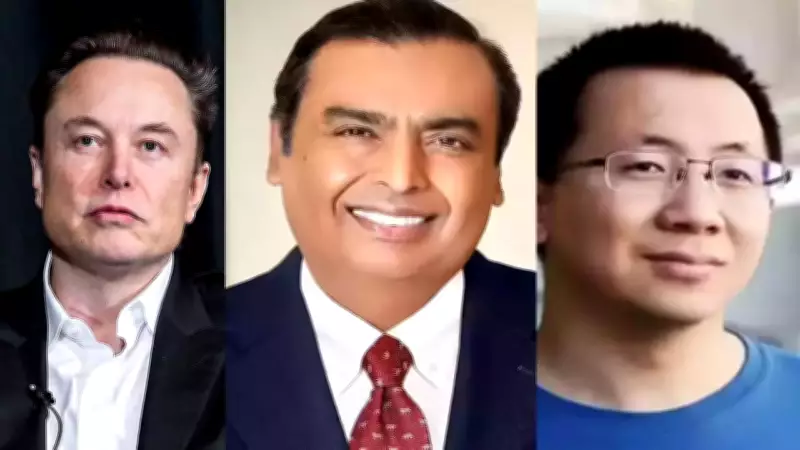
- United States - 902 billionaires (Elon Musk as prominent figure)
- China - 450 billionaires (Zhang Yiming as notable representative)
- India - 205 billionaires (Mukesh Ambani as leading billionaire)
- Germany - 171 billionaires (Dieter Schwarz as wealthiest individual)
- Russia - 140 billionaires (Vagit Alekperov as prominent name)
- Canada - 76 billionaires (Changpeng Zhao as notable figure)
- Italy - 74 billionaires (Giovanni Ferrero as top billionaire)
- Hong Kong - 66 billionaires (Li Ka-shing as most recognized name)
- Brazil - 56 billionaires (Eduardo Saverin as significant contributor)
- United Kingdom - 55 billionaires (Michael Platt as co-founder of BlueCrest)
Detailed Country Analysis of Billionaire Wealth
United States: The Undisputed Leader
The United States maintains a commanding lead with approximately 902 billionaires, a position built over decades through multiple economic drivers. This wealth accumulation stems from diverse sources including:
- Successful technology startups scaling rapidly
- Robust stock market performance
- Established corporate giants across various sectors
Elon Musk stands as the most prominent American billionaire, with his wealth closely tied to Tesla, SpaceX, and other ventures. His financial standing has experienced significant fluctuations in recent years, often mirroring stock market movements and investor sentiment.
China: The Tech-Driven Contender
China follows with roughly 450 billionaires, with much of this wealth emerging during the country's remarkable technology boom. The growth has been particularly notable in:
- Mobile applications and digital platforms
- Online services and e-commerce ecosystems
- Technology innovation and digital transformation
Zhang Yiming, founder of ByteDance, represents one of China's most notable billionaires, having built a global technology empire from domestic beginnings.
India: The Rising Economic Power
India continues its impressive ascent with approximately 205 billionaires, a number that keeps climbing steadily. Indian billionaire wealth originates from diverse sources:
- Traditional industries with established foundations
- Modern sectors including telecommunications and retail
- Digital services and technology-driven enterprises
Mukesh Ambani remains India's most prominent billionaire, leading Reliance Industries across multiple sectors including oil, mobile networks, and various shopping platforms.
European and Other Global Players
Germany hosts about 171 billionaires, with Dieter Schwarz leading as the wealthiest individual through Schwarz Group's operations of Lidl and Kaufland supermarkets. His wealth accumulation demonstrates the power of disciplined retail expansion across Europe and beyond.

Russia maintains close to 140 billionaires, with wealth primarily concentrated in energy and natural resources including oil, gas, metals, and mining. Vagit Alekperov's association with Lukoil represents this sector's significant contribution to Russian billionaire wealth.
Canada counts 76 billionaires, a notable number considering the country's population size. Wealth sources span finance, natural resources, and increasingly, technology sectors. Changpeng Zhao (CZ), founder of Binance, has emerged as one of Canada's most discussed billionaire figures.
Italy features 74 billionaires, with Giovanni Ferrero leading through the global success of brands like Nutella, Kinder, and Ferrero Rocher. The company's gradual international expansion has positioned Italy firmly within global billionaire rankings.
Hong Kong maintains 66 billionaires, with Li Ka-shing remaining the most recognized name. His wealth, built over decades across ports, telecommunications, and real estate, continues to influence regional economic dynamics even after his reduced operational involvement.
Brazil hosts 56 billionaires, with wealth levels fluctuating alongside the country's economic cycles. Eduardo Saverin, Facebook co-founder, represents Brazil's connection to global technology wealth while contributing significantly to the nation's billionaire count.
United Kingdom rounds out the top ten with 55 billionaires. Michael Platt, co-founder of BlueCrest Capital Management, exemplifies the UK's strength in financial services and hedge fund management.
Economic Implications and Future Trends
The distribution of billionaires across countries provides valuable insights into global economic patterns and development trajectories. The stabilization of billionaire numbers in 2024 suggests a period of economic consolidation following the volatility of recent years. As business scenarios continue to evolve with technological advancements and shifting global trade patterns, the billionaire landscape will likely undergo further transformations, reflecting broader economic trends and opportunities across different regions and sectors.





