

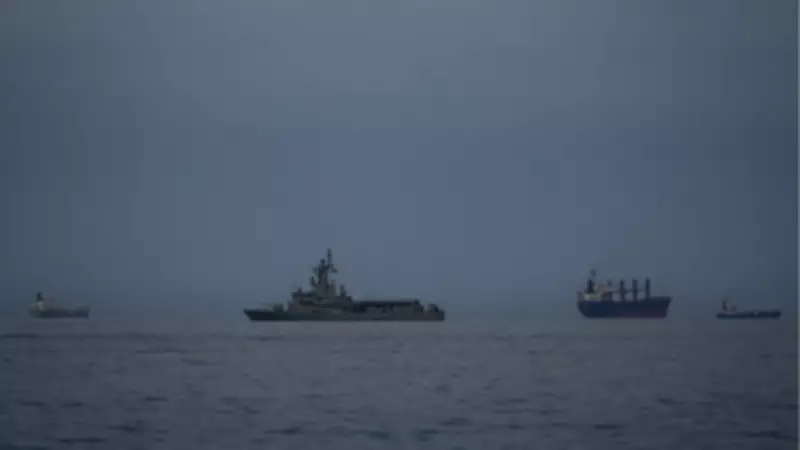
Iran Explores Yuan-Based Oil Transit Through Critical Strait
According to a report from CNN citing an Iranian official, Iran is actively considering a new policy that would allow a restricted number of oil tankers to navigate the strategically vital Strait of Hormuz. The key condition for this passage would be that the oil cargo aboard these vessels must be traded using the Chinese yuan as the currency of transaction.
Regional Tensions Escalate Following US Military Action
This development comes against a backdrop of heightened military and diplomatic friction in the Middle East. The situation intensified dramatically after former US President Donald Trump announced that American forces had conducted a significant bombing raid targeting military installations on Iran's Kharg Island. Trump described the operation on Truth Social as "one of the most powerful bombing raids in the History of the Middle East," claiming it "totally obliterated every MILITARY target in Iran's crown jewel, Kharg Island."
However, the US president clarified that the strikes were deliberately designed to avoid Iran's crucial oil infrastructure on the island, which is responsible for handling approximately 90% of the nation's crude oil exports. Trump issued a stern warning, stating that the United States could potentially target these oil facilities if Iran continues to obstruct commercial shipping through the narrow Strait of Hormuz.

Global Oil Markets and Currency Dynamics
The potential shift towards yuan-denominated transactions for oil passing through the strait represents a significant move in global energy finance. While most international oil trade continues to be priced and settled in US dollars, there are notable exceptions, such as sanctioned Russian crude which is often traded in rubles or yuan. China has pursued a long-term strategy to expand the international use of its currency in the oil sector, including efforts to persuade major producers like Saudi Arabia to accept yuan for crude purchases.
Despite these efforts, the US dollar maintains its position as the world's dominant reserve currency, and the yuan has yet to achieve widespread acceptance in global commodity markets. The mere discussion of such a policy by Iran, however, underscores the geopolitical dimensions of energy trade.
Strategic Importance of the Strait of Hormuz
The Strait of Hormuz is arguably the world's most critical maritime chokepoint for the transit of oil and natural gas. Any disruption to the flow of tankers through this narrow passageway sends immediate shockwaves through global energy markets and raises alarm among major importing nations. Countries like India, which rely heavily on crude oil imports that transit this route, are particularly vulnerable to supply disruptions.
These concerns have already manifested in the markets, with global crude oil prices recently surging to their highest levels since July 2022, a period marked by the initial shock of Russia's invasion of Ukraine. The uncertainty surrounding the strait's security is a primary driver of this price volatility.
International Warnings and Humanitarian Concerns
The United Nations has issued grave warnings about the potential global consequences of any restrictions on shipping through the Strait of Hormuz. Tom Fletcher, the UN's under-secretary-general for humanitarian affairs, emphasized the rapid and far-reaching impact of such a blockade.
"When ships stop moving through that Strait, the consequences travel fast," Fletcher stated. He further explained that essential commodities like food, medicine, and fertilizer become harder to transport and significantly more expensive to deliver, threatening global supply chains and humanitarian aid efforts.
In summary, Iran's reported consideration of a yuan-for-passage plan for the Strait of Hormuz is a direct response to escalating regional tensions and represents a strategic attempt to leverage its control over a vital global shipping lane. The move challenges the dollar's hegemony in oil markets and occurs amidst a volatile security environment following US military strikes, with the potential for significant repercussions on global energy security, trade flows, and economic stability.






