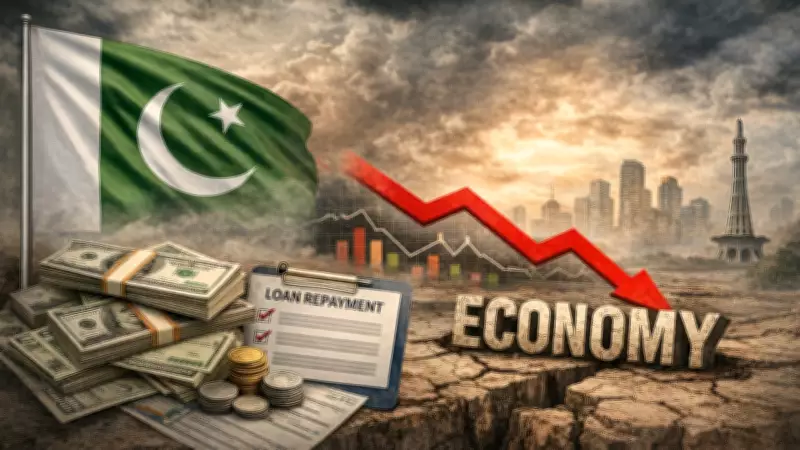
Pakistan's Economy in Peril: Over-Reliance on Short-Term Foreign Loans Sparks Alarm
The economy of Pakistan is teetering on the edge of a precarious situation, primarily due to its heavy dependence on short-term foreign loans, as highlighted by prominent business leaders and economists. According to a report from Express Tribune, key figures are issuing urgent calls for the government to engage in negotiations with friendly nations to extend loan repayment periods and implement critical structural reforms. This move is deemed essential to avert a deepening economic crisis.
Warnings from Business Leaders and Economists
Raja Waseem Hassan, Vice Chairman of the Pakistan Industrial and Traders Associations Front (PIAF), has sounded a stark warning. He emphasized that without securing extensions on loan maturities, the country will continue to grapple with persistent balance-of-payments problems. Hassan pointed out that while foreign reserves have shown improvement, reaching $21 billion in January 2026, this growth is largely underpinned by temporary support from international institutions and allied countries, making it unsustainable in the long run.
"The government must immediately begin serious negotiations with friendly nations to secure longer repayment periods and ease pressure on foreign exchange reserves," Hassan asserted. He acknowledged recent positive diplomatic strides with Gulf states and the United States but cautioned that these alliances are subject to rapid change, underscoring the need for a more robust economic foundation.

Trade Deficits and Growth Challenges
Pakistan's trade performance remains a significant concern. In the fiscal year 2025, exports amounted to $32 billion, yet imports consistently outpace export earnings, exacerbating the trade deficit. Dr. Saleem Ahmed, a senior economist, warned that the country cannot indefinitely rely on rollovers and short-term deposits. He advocates for achieving an annual economic growth rate of 5-6% to stabilize the debt-to-GDP ratio, which currently stands at approximately 70%.
Economic growth prospects remain modest, with the International Monetary Fund (IMF) projecting a 3.6% GDP growth for FY26, while the State Bank of Pakistan forecasts a slightly higher range of 3.75-4.75%. Although inflation has decreased from its peak of 38% in 2023, stringent monetary policies have inadvertently slowed industrial growth and constrained business lending, further hampering economic recovery.
Expert Recommendations for Economic Stability
To address these challenges, experts have proposed a multi-faceted approach:
- Focus on Export-Oriented Sectors: Prioritizing industries such as textiles, information technology, and agricultural processing to boost export earnings.
- Enhance Tax Collection: Improving revenue generation through more efficient tax systems.
- Reduce Energy Waste: Implementing measures to curb energy inefficiencies and lower operational costs.
- Boost Remittances: Encouraging higher inflows from overseas workers, with projections suggesting remittances could reach $42 billion in FY26.
- Increase Foreign Direct Investment (FDI): Attracting more FDI beyond the current annual level of $1.5-2 billion to reduce dependency on external borrowing.
Hassan further emphasized that while Pakistan's strategic military importance can aid in diplomatic efforts, economic strength is paramount for long-term stability. "Economic strength must be the real shield. Without strong buffers and self-reliance, external partnerships alone cannot guarantee stability," he concluded, urging a shift towards greater economic independence and resilience.