

Strait of Hormuz Closure Sends Shockwaves Through Global Markets as Oil Prices Surge
The closure of the Strait of Hormuz has triggered severe disruptions in global markets, with oil prices climbing sharply as the conflict between the US, Israel, and Iran shows no signs of de-escalation. This expanding crisis has brought tanker movement through the vital maritime corridor to a complete standstill, highlighting its critical role in worldwide energy supplies. The strategic significance of the Strait of Hormuz cannot be overstated, as it handles approximately 20% of global oil shipments, making any interruption a serious threat to international trade flows.
Importance of the Strait of Hormuz for Global Shipping and Energy Security
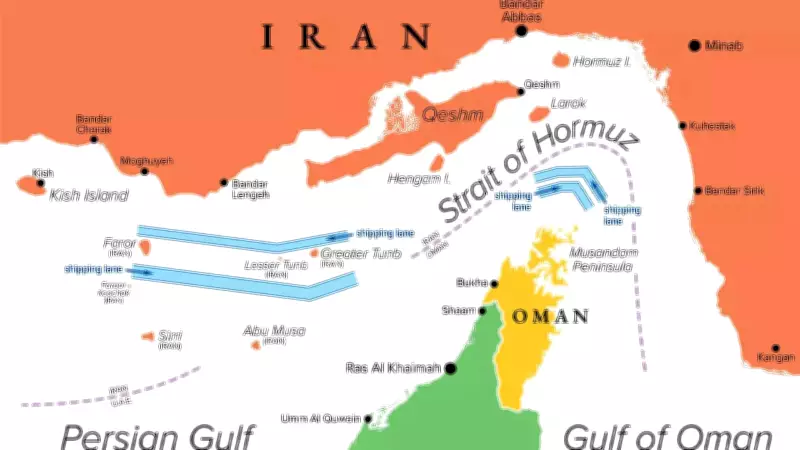
The Strait of Hormuz is a curved channel that narrows to about 33 kilometers at its tightest point, serving as the crucial link between the Persian Gulf and the Gulf of Oman. This passage provides access to global sea routes for vessels transporting crude oil and natural gas from key producers such as Saudi Arabia, Kuwait, Iraq, Qatar, Bahrain, the United Arab Emirates, and Iran. Although portions fall within the territorial waters of Iran and Oman, it is recognized as an international passage open to all nations. Historically, this strait has been central to commerce, from ancient trade in ceramics and silk to modern-day energy transit.
In contemporary times, the Strait of Hormuz functions as a pivotal transit point for massive tankers, with a large share of exports destined for Asian economies. India, in particular, is seen as vulnerable due to its heavy reliance on Gulf-origin crude. Any disruption here poses a direct challenge to energy security, as most volumes transiting the strait have no alternative exit routes from the region, despite some bypass pipelines operated by Saudi Arabia and the UAE.

Escalating Conflict and Immediate Impacts on Oil Prices and Shipping
Iran has already targeted multiple vessels in the Strait of Hormuz and issued warnings against attempts to cross, effectively halting all traffic. Iranian Brig. Gen. Ebrahim Jabbari, an adviser to the paramilitary Revolutionary Guard, declared the strait closed, threatening to set ablaze any vessel attempting transit. In response, major global shipping lines have suspended operations. Danish giant Maersk, the world's largest container carrier, announced a pause in transits until further notice, with other operators like Hapag-Lloyd, CMA-CGM, and MSC following suit.
Data from Clarksons Research indicates that roughly 3,200 vessels, accounting for about 4% of global shipping tonnage, are currently idle within the Persian Gulf. This shutdown has driven oil prices higher, with experts warning of potential triple-digit crude prices if the closure extends beyond a month. Hakan Kaya, senior portfolio manager at Neuberger Berman, noted that while a limited disruption of one to two weeks might be manageable, a prolonged shutdown could push European natural gas rates toward crisis levels seen in 2022.
Global Responses and Strategic Measures to Mitigate Risks
In reaction to the crisis, US President Donald Trump announced on social media that he has directed the United States' development finance agency to offer political risk insurance for vessels transporting oil through the Persian Gulf, describing it as available "at a very reasonable price." This insurance aims to protect companies from financial losses due to political instability or violence. Additionally, Trump stated that the US Navy would provide escorts for oil tankers if required, leveraging its regional presence of at least eight destroyers and three littoral combat ships previously used to accompany commercial shipping.
These measures underscore the high stakes involved, as the global community scrambles to address the escalating tensions. The closure not only impacts immediate oil supplies but also threatens broader economic stability, with energy companies and governments closely monitoring the situation for any signs of resolution or further escalation.

Vulnerabilities of India and China in the Face of Strait Closure
On the energy front, India is particularly vulnerable to the closure of the Strait of Hormuz. According to data from Kpler, approximately 2.5 to 2.7 million barrels per day of India's crude imports move through this corridor, primarily from Iraq, Saudi Arabia, the UAE, and Kuwait. Recent reductions in Russian crude intake have increased India's reliance on Middle Eastern barrels, heightening short-term vulnerability. However, Indian refiners could potentially redirect purchases toward Russian grades if Gulf inflows tighten, as Russia has expressed readiness to help meet India's energy needs.
India also depends on imports for about 80 to 85% of its LPG consumption, with most supplies passing through the Strait of Hormuz. Unlike crude oil, India lacks strategic LPG reserves on a comparable scale, making supply chains more vulnerable to logistics disruptions. Despite this, the government has stated that India is in a 'comfortable position' regarding energy security, with supplies of petrol, diesel, and strategic reserves available to meet needs.
China, as the largest energy-importing country globally, might seem especially exposed to rising crude oil and natural gas prices. However, its extensive crude reserves provide a substantial buffer against sudden price increases, reducing the risk of energy-driven inflation. In an extended disruption scenario, Chinese refiners could potentially benefit by increasing exports of refined fuels, capitalizing on elevated prices if other Asian refiners face constraints. China also holds strategic advantages as the main buyer of discounted Russian crude and a likely destination for Iranian oil shipments that left before recent strikes.
The contrasting vulnerabilities between India and China highlight the complex dynamics at play in global energy markets. As the US-Israel-Iran conflict continues to unfold, the closure of the Strait of Hormuz remains a critical flashpoint, with far-reaching implications for international trade, economic stability, and geopolitical relations. Stakeholders worldwide are urged to prepare for potential long-term disruptions while hoping for a swift de-escalation to restore normalcy to this vital maritime corridor.





