

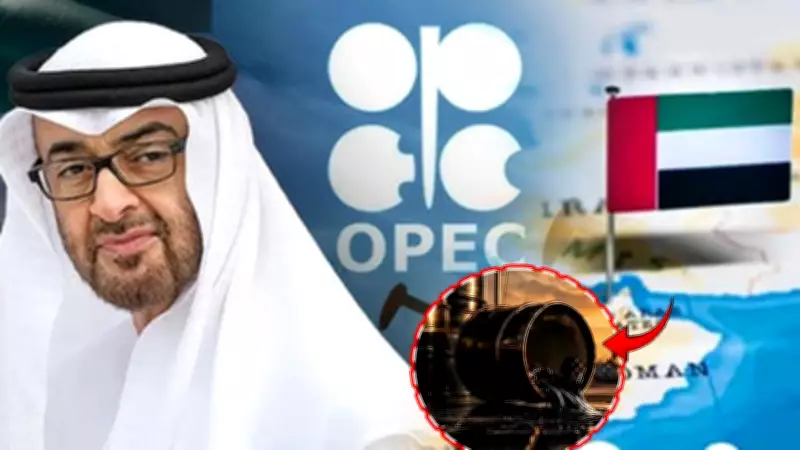
The United Arab Emirates (UAE) has announced its departure from the Organization of the Petroleum Exporting Countries (OPEC) and its broader alliance, OPEC+, in a move that is set to reshape global oil dynamics. The decision, effective immediately, allows the UAE to pursue independent production strategies outside the cartel's output limits, aiming to maximize its oil revenue by increasing supply.
Implications for Global Oil Prices
As one of the world's lowest-cost oil producers, the UAE's exit could significantly impact global oil markets. By boosting production beyond OPEC+ quotas, the UAE may contribute to an increase in global supply, which could ease upward pressure on oil prices. For major oil importers like India, this development offers potential relief through lower import costs and reduced inflationary pressures. However, the extent of price moderation will depend on how much additional oil the UAE can bring to market and the response of other producers.
Geopolitical Risks and Supply Stability
Despite the potential for increased supply, geopolitical tensions continue to threaten smooth oil flows. The Strait of Hormuz, a critical chokepoint for global oil shipments, remains a flashpoint. Any disruption in this region could quickly offset gains from higher UAE production, keeping markets volatile in the short term. India, which relies heavily on oil imports from the Middle East, remains vulnerable to such disruptions.

OPEC's Weakening Influence
The UAE's exit underscores deepening divisions within OPEC, particularly with Saudi Arabia, the group's de facto leader. The move weakens OPEC's collective ability to coordinate production and influence prices, pushing the oil market toward greater competition and less centralized control. This fragmentation could lead to more volatile pricing dynamics in the future, as individual producers prioritize national interests over group cohesion.
What It Means for India
India, the world's third-largest oil consumer and importer, stands to benefit from lower global oil prices resulting from increased supply. Reduced fuel costs can help curb inflation, improve the trade balance, and support economic growth. However, the benefits may be tempered if geopolitical instability disrupts supply routes or if other OPEC members retaliate by cutting their own output. India's energy security strategy will need to adapt to the evolving landscape, potentially diversifying sources and strengthening strategic reserves.
In summary, the UAE's departure from OPEC marks a significant shift in the global oil order, with both opportunities and risks for India. While lower prices offer immediate economic relief, long-term stability remains uncertain amid geopolitical tensions and changing alliances within the oil-producing world.






