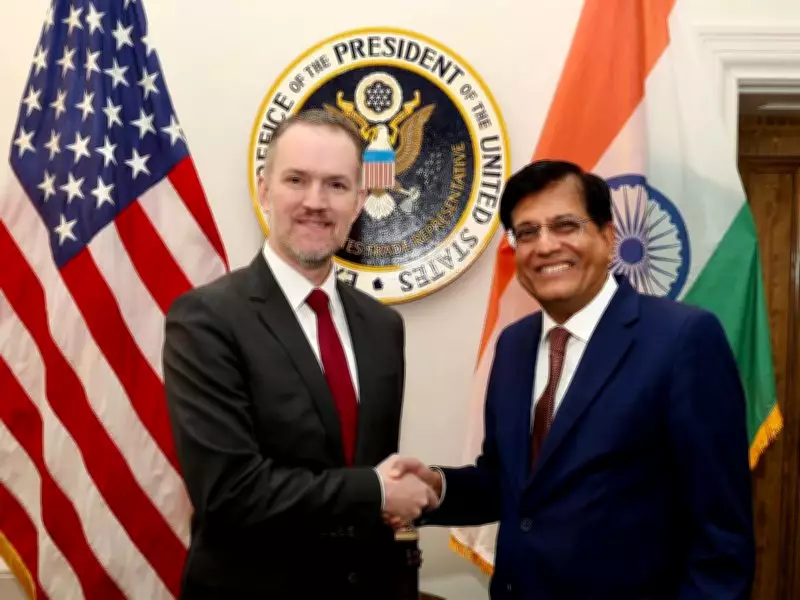
US Ambassador Greer Praises India-US Trade Deal as a Milestone for Economic Ties
In a significant development, US Trade Representative Ambassador Greer has warmly welcomed the announcement of a joint statement outlining a comprehensive trade deal between the United States and India. This agreement, hailed by Greer, is set to dismantle tariff and non-tariff barriers, thereby opening India's expansive market to American products and fostering deeper bilateral relations.
Unlocking Economic Potential for Both Nations
Ambassador Greer emphasized that the trade deal, announced by President Donald Trump, will substantially benefit US workers, farmers, and producers. By lowering tariffs across all US industrial goods and a broad spectrum of agricultural products, the agreement aims to enhance market access and stimulate economic growth. "President Trump's dealmaking is unlocking one of the largest economies in the world for American workers and producers," Greer stated, highlighting the strategic importance of this move.
The joint statement, released by the White House and India's Commerce Ministry, marks a pivotal step toward advancing the broader US-India Bilateral Trade Agreement (BTA) negotiations initiated by President Trump and Prime Minister Narendra Modi in February 2025. This interim agreement is described as a historic milestone, reflecting a shared commitment to reciprocal and balanced trade based on mutual interests.

Key Provisions and Benefits of the Trade Framework
Under the framework, India has agreed to eliminate or reduce tariffs on a wide range of US goods, including:
- Dried distillers' grains and red sorghum for animal feed
- Tree nuts, fresh and processed fruits, and soybean oil
- Wine and spirits, among other agricultural products
In return, the United States will apply a reciprocal tariff of 18 percent on Indian-origin goods, covering sectors such as textiles and apparel, leather and footwear, plastics and rubber, organic chemicals, home decor, artisanal products, and certain machinery. Upon successful conclusion of the interim agreement, the US will remove these tariffs on various goods, including generic pharmaceuticals, gems and diamonds, and aircraft parts.
Additionally, the framework includes provisions for the removal of US tariffs on certain Indian aircraft and aircraft parts imposed under national security-related proclamations. India will also receive a preferential tariff rate quota for automotive parts, aligned with US national security requirements. Negotiated outcomes for generic pharmaceuticals and pharmaceutical ingredients are anticipated based on the results of a US Section 232 investigation.
Strengthening Digital Trade and Future Prospects
Both countries have committed to providing preferential market access in sectors of mutual interest and establishing rules of origin to ensure that the benefits of the agreement primarily accrue to the United States and India. Furthermore, they have pledged to address barriers to digital trade and develop a pathway for robust, mutually beneficial digital trade rules under the BTA.
Ambassador Greer expressed gratitude to Indian Minister of Commerce and Industry Piyush Goyal for his leadership in achieving fair and balanced trade. "Today's announcement demonstrates the deepening ties between the United States and India as we create new opportunities for farmers and entrepreneurs in both countries," he remarked, underscoring the collaborative spirit driving this initiative.
This trade deal is poised to enhance economic cooperation, reduce trade barriers, and foster innovation, setting a positive precedent for future bilateral engagements between the two nations.