

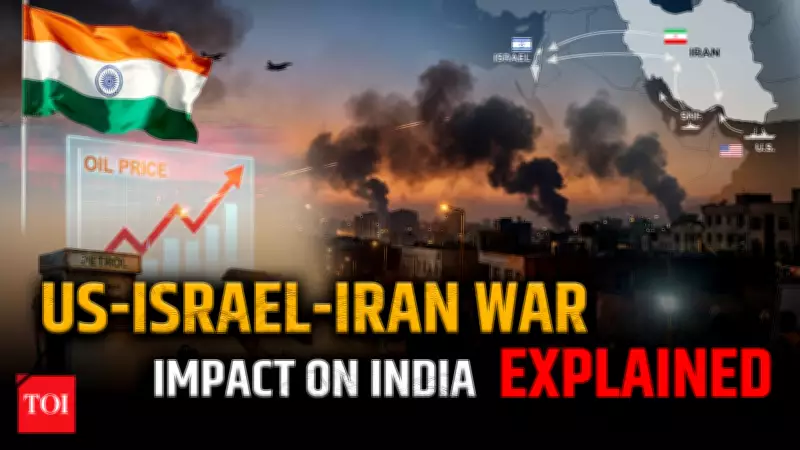
Escalating US-Israel-Iran Tensions Pose Significant Economic Risks to India
The intensifying geopolitical conflict between the United States, Israel, and Iran represents a substantial threat to India's economic stability, with potential repercussions spanning from energy security to international trade and aviation logistics. As these global powers engage in heightened military and diplomatic posturing, India—a nation deeply integrated into the world economy—faces multiple vulnerabilities that could affect millions of citizens and businesses.
Critical Impact on Oil Prices and Energy Security
India's dependence on imported crude oil makes it particularly susceptible to price volatility triggered by Middle Eastern conflicts. The Strait of Hormuz, a vital maritime chokepoint through which approximately one-fifth of the world's oil passes, could become a flashpoint in any US-Israel-Iran confrontation. Any disruption to shipping through this strait would likely cause crude oil prices to surge dramatically.
This scenario presents several immediate challenges for India:

- Increased import costs that would strain the current account deficit
- Potential inflationary pressures as higher fuel costs ripple through the economy
- Complications for India's strategic energy partnerships, including those with Russia
- Pressure on government finances through potential fuel subsidies
Trade Disruptions and Market Volatility
Beyond energy markets, escalating tensions threaten to disrupt India's extensive trade networks. The Middle East serves as a crucial corridor for Indian exports and imports, with billions of dollars in goods flowing through the region annually. Any conflict that impedes shipping lanes or triggers regional instability could:
- Delay critical shipments of both raw materials and finished goods
- Increase insurance costs for cargo transiting through conflict zones
- Force rerouting of vessels, adding time and expense to supply chains
- Create uncertainty that could spook foreign investors and trigger stock market volatility
The Indian stock markets, already sensitive to global geopolitical developments, would likely experience heightened turbulence as investors assess the conflict's potential duration and economic consequences.
Aviation Challenges and Flight Reroutes
Commercial aviation represents another sector vulnerable to Middle Eastern tensions. Many international flights between India and Europe or North America traditionally pass through airspace that could become restricted or dangerous during military conflicts. Airlines may need to implement significant rerouting, resulting in:
- Longer flight times and increased fuel consumption
- Higher operational costs potentially passed to consumers through ticket price increases
- Potential cancellations or delays affecting both passenger and cargo flights
- Complications for India's growing aviation sector and tourism industry
Broader Economic Implications
The interconnected nature of the global economy means that a conflict between the US, Israel, and Iran would have ripple effects extending far beyond direct trade and energy impacts. India could face:
Inflationary pressures as transportation costs rise across multiple sectors, potentially forcing the Reserve Bank of India to maintain or increase interest rates. Currency volatility might emerge as the rupee responds to both oil price movements and broader market uncertainty. Additionally, diplomatic balancing challenges would intensify as India navigates relationships with all involved parties while protecting its national interests.
While the exact contours of any potential conflict remain uncertain, Indian policymakers and businesses must prepare contingency plans for these economic vulnerabilities. The country's remarkable economic growth in recent years could face significant headwinds if tensions between the US, Israel, and Iran escalate into open conflict or prolonged regional instability.






