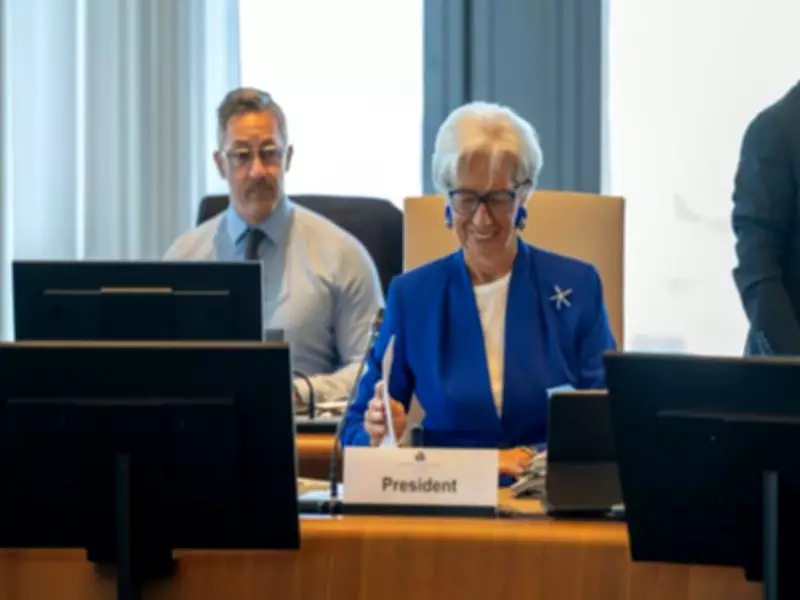
The European Central Bank (ECB) has increased its key interest rates for the first time in almost three years, responding to inflationary pressures stemming from the ongoing Middle East conflict. In a move announced on June 11, 2026, the ECB raised all three key rates by 25 basis points.
Rate Adjustments and Inflation Outlook
The deposit facility rate now stands at 2.25 percent, the main refinancing rate at 2.4 percent, and the marginal lending facility rate at 2.65 percent. The central bank also revised its inflation projections upward for 2026 and 2027, citing a higher trajectory for energy prices that could spill over into food, goods, and services inflation.
According to the ECB's latest staff projections, headline inflation is expected to average 3.0 percent in 2026, 2.3 percent in 2027, and 2.0 percent in 2028. Core inflation, excluding energy and food, is forecast to average 2.5 percent in both 2026 and 2027, before declining to 2.2 percent in 2028.

Growth Concerns Persist
The rate hike comes amid lingering concerns about economic growth, as rising prices challenge households across the 21-country euro area. Inflation in the currency bloc currently exceeds 3 percent, well above the ECB's 2 percent target. The central bank has also downgraded its economic growth projections for 2026 and 2027, now expecting average growth of 0.8 percent in 2026, 1.2 percent in 2027, and 1.5 percent in 2028.
The ECB attributed the weaker growth outlook to the impact of the war on commodity markets, real incomes, and confidence. It noted that the outlook remains highly uncertain, with upside risks to inflation and downside risks to growth. The full implications of the conflict for medium-term inflation and growth will depend on the intensity and duration of the energy price shock, as well as its indirect and second-round effects.
Global Context
The prolonged closure of the Strait of Hormuz has disrupted energy markets, fueling inflation concerns worldwide. In the United States, the consumer price index rose 4.2 percent in May, raising worries for newly appointed Federal Reserve Chairman Kevin Warsh as he prepares for his first policy meeting on June 16-17.