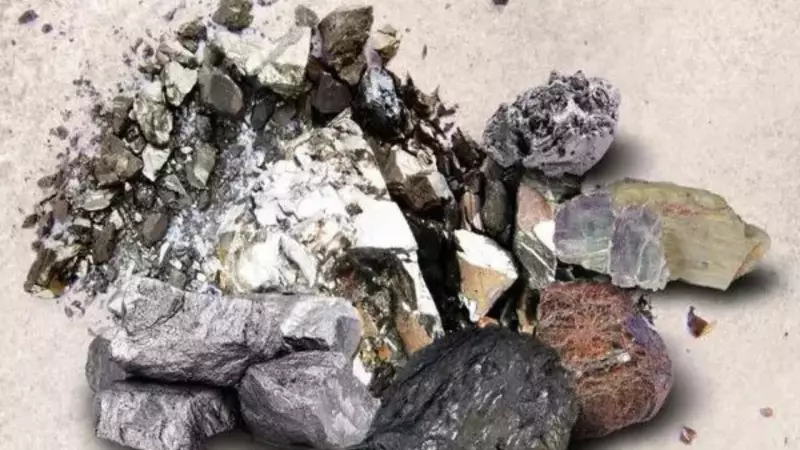
The European Union has taken a decisive step to shield its economy from external shocks, launching a multi-billion-euro strategy aimed at drastically reducing its reliance on China for critical rare earth minerals. Announced on Wednesday, the comprehensive plan seeks to fortify the bloc's domestic mining, refining, and recycling capabilities amidst escalating geopolitical tensions that threaten vital supply chains.
A Strategic Response to Geopolitical Realities
The move comes after months of market turbulence triggered by Beijing's export controls on key materials, which have severely disrupted manufacturing sectors across Europe, including automotive, electronics, and defence. EU industry chief Stephane Sejourne stated the bloc is "responding to the new global geopolitical reality," as the European Commission committed nearly €3 billion to fund strategic projects within the EU and in partner nations. Sejourne has previously criticised China's overwhelming market control, likening it to a rare-earths "racket."
A cornerstone of this new initiative is the establishment of a European Centre for Critical Raw Materials. Modelled on Japan's state-run JOGMEC, this hub will act as a central nerve centre, monitoring demand, coordinating joint procurement for member states, and managing strategic stockpiles and emergency deliveries to companies in need.

Boosting Domestic Capacity and Restricting Waste Exports
In a parallel effort to create a circular economy, Brussels has proposed significant measures to keep valuable materials within its borders. The Commission plans to curb exports of scrap and waste from permanent magnets starting next year, a move designed to stimulate and feed the domestic recycling industry. This policy will be followed by targeted restrictions on aluminium waste, with copper potentially added to the list at a later stage.
Caught in a Geopolitical Squeeze
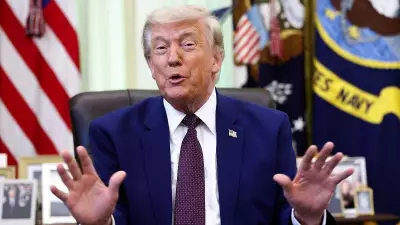
Despite enacting a critical raw-materials law two years ago, the EU finds itself in a precarious position, squeezed between China's tightening export regime and renewed US efforts under President Donald Trump to secure mineral access through exclusive bilateral deals. The urgency is underscored by a new survey from the EU Chamber of Commerce in China, which found that 60% of European firms anticipate supply-chain disruptions due to Chinese government restrictions, with 13% fearing they may have to halt or slow production entirely.
Updating its "economic security" doctrine on the same day, the Commission warned that global trade tensions have exacerbated existing vulnerabilities. "Trade is being weaponised. Supply chains are under pressure," declared EU trade chief Maros Sefcovic while presenting the plan. He added that strategic choke points are turning economic dependency into daily political pressure for European companies.
The revised doctrine advocates for a more assertive use of existing tools—including foreign-investment screening, export controls, and supplier diversification—while calling for the development of new mechanisms to address persistent gaps. "Europe will continue to champion open trade," Sefcovic affirmed, "but our openness must be backed by security." This landmark strategy marks the EU's most robust attempt yet to de-risk its economy and secure the raw materials essential for its green and digital transitions.