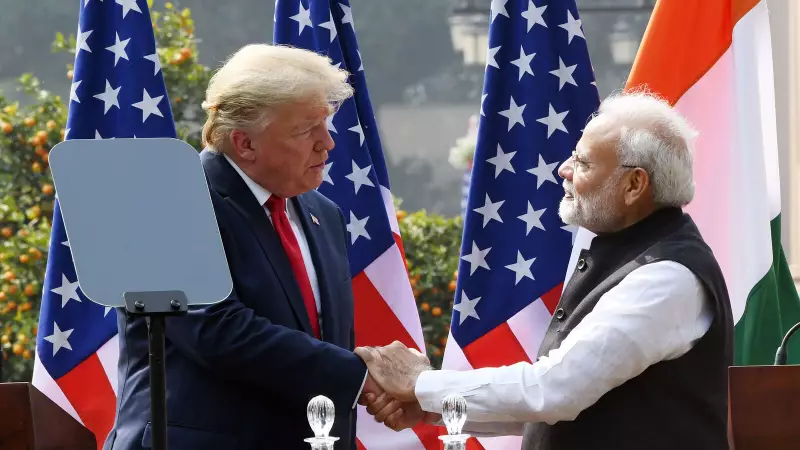
India and US Edge Closer to Major Trade Deal as Negotiations Show 'Very Significant' Progress
India and the United States are reportedly on the brink of finalizing a significant trade agreement, with official sources confirming that very substantial progress has been achieved in the ongoing negotiations. This development comes as India simultaneously approaches the final stages of a separate free trade deal with the European Union, highlighting the nation's proactive engagement in global trade partnerships.
Steady Momentum in Bilateral Trade Talks
According to reports citing informed officials, the bilateral trade agreement (BTA) talks between India and the US have maintained steady momentum, bringing both sides very close to a conclusive outcome. The official sources emphasized that negotiators from both countries have remained in continuous contact, even during the critical final phases of the EU trade pact discussions. "We are hopeful of a positive outcome," a source was quoted as saying, reflecting optimism about the impending deal.
The sources clarified that the impending trade agreement with the European Union should not be interpreted as a strategic move to counterbalance trade relations with the United States. They underscored the crucial importance of the US market for Indian exporters, noting that exports to the US are valued at approximately USD 86 billion, compared to USD 76 billion to the EU. "India would like to see exports grow both in the US and Europe as we don't see one over the other," a source explained, adding that such growth would foster job creation and enhance manufacturing capabilities.

Upcoming Diplomatic Engagement and Broader Context
In a related development, External Affairs Minister S Jaishankar is scheduled to visit the United States next week to participate in a meeting focused on critical minerals. During this visit, he is expected to hold discussions with senior officials from the Trump administration, including US Secretary of State Marco Rubio. This diplomatic engagement is seen as part of the broader efforts to strengthen bilateral ties and address key trade issues.
The officials also addressed India's stance on regional trade agreements, explicitly ruling out any reconsideration of the decision not to join the China-dominated Regional Comprehensive Economic Partnership (RCEP). This reaffirms India's strategic approach to trade partnerships, prioritizing agreements that align with its economic interests and export goals.
Challenges and Strategic Importance
The path to a US-India trade deal has not been without obstacles. Since 2025, the two nations have conducted multiple rounds of negotiations, but the process faced significant hurdles following the imposition of 50% tariffs on Indian goods by the Trump administration. Additionally, trade relations have been strained by other contentious issues, such as Trump's remarks on the India-Pakistan conflict and America's evolving immigration policies.
Despite these challenges, the importance of the US market for Indian exporters remains paramount. The official sources highlighted that the current global trade environment, where the MFN-based WTO system is under stress, necessitates strategic navigation. The Most-Favoured-Nation (MFN) principle, a cornerstone of the WTO framework, ensures non-discriminatory trade advantages among member nations, but its efficacy is being tested in today's complex trade landscape.
Parallel Developments with the European Union
Simultaneously, India's free trade agreement with the European Union is poised to have a transformative impact on bilateral trade. This pact, which encompasses nearly a quarter of the global GDP, is expected to:

- Eliminate tariffs on 99% of Indian exports to the EU.
- Reduce duties on over 97% of EU exports to India.
- Generate annual tariff savings of up to four billion euros for European exporters.
Indian sectors such as textiles, apparel, leather goods, handicrafts, footwear, and marine products are anticipated to benefit significantly from this agreement. Conversely, European industries, including wine, automobiles, chemicals, and pharmaceuticals, are set to gain enhanced market access. Notably, the pact will substantially lower the current 150% duties on EU wine exports, bringing them down to a range of 20% to 30%.
In summary, as India advances toward finalizing trade agreements with both the United States and the European Union, the nation is strategically positioning itself to bolster exports, stimulate economic growth, and reinforce its role in the global trade arena. The progress in US-India negotiations marks a pivotal step in fostering stronger bilateral economic relations and navigating the evolving dynamics of international trade.