Oil Prices Surge Over 4% Amid Renewed West Asia Tensions
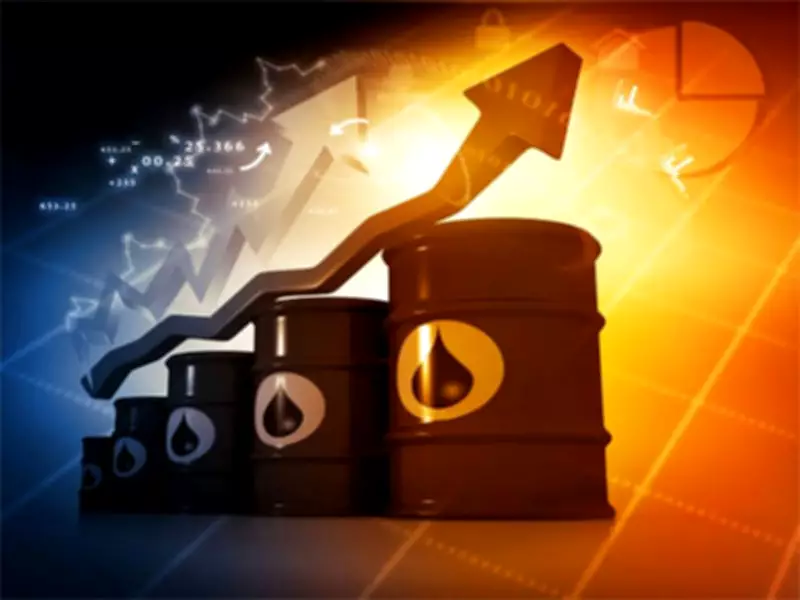
Global crude oil prices climbed more than 4% on Monday after Israel and Iran exchanged military strikes, threatening a fragile ceasefire even as former U.S. President Donald Trump signaled that a peace deal is not far away. The renewed hostilities have raised fears of a prolonged closure of the strategic Strait of Hormuz, a critical chokepoint for global oil shipments.
Price Movements
Brent crude futures jumped $4.42, or 4.47%, to $97.15 per barrel, while U.S. West Texas Intermediate (WTI) crude rose $4.07, or 4.50%, to $94.61 per barrel, according to Reuters data. The sharp increase reversed some of the losses seen on Friday, when prices fell on hopes that the U.S. and Iran were nearing a peace agreement.
Escalation in the Region
Iran fired missiles at Israeli targets on Sunday after Israel launched airstrikes on Lebanon. Israel retaliated with strikes on Iran, including a petrochemical plant, despite Trump urging restraint and insisting that a deal is very close. A durable ceasefire between Israel and Lebanon and an immediate cessation of hostilities are key demands of the Iranian regime for striking a peace deal with the U.S.

The conflict has plunged the volatile region further into uncertainty. Oil prices have been elevated since the war began in late February, peaking at $120 per barrel during the height of the conflict in March.
OPEC+ Production Decision
Meanwhile, OPEC+ decided to increase production by 188,000 barrels per day in July, marking the fourth consecutive monthly hike. However, member countries have struggled to meet production targets due to the blockade of the Strait of Hormuz, which has disrupted supply chains.
Economic Implications
Higher crude oil prices have stoked inflation fears in the U.S. and other economies. Rising energy costs have squeezed household budgets, leading to a drop in U.S. consumer sentiment to an all-time low in May. Stronger-than-expected U.S. jobs data released on Friday further eroded hopes of a Federal Reserve interest rate cut this year. Newly appointed Fed Chair Kevin Warsh will chair his first Federal Open Market Committee (FOMC) meeting on June 16-17.
Goldman Sachs expects the Federal Reserve to keep interest rates unchanged through 2026 and delay any rate cut until 2027, according to a Reuters report.