

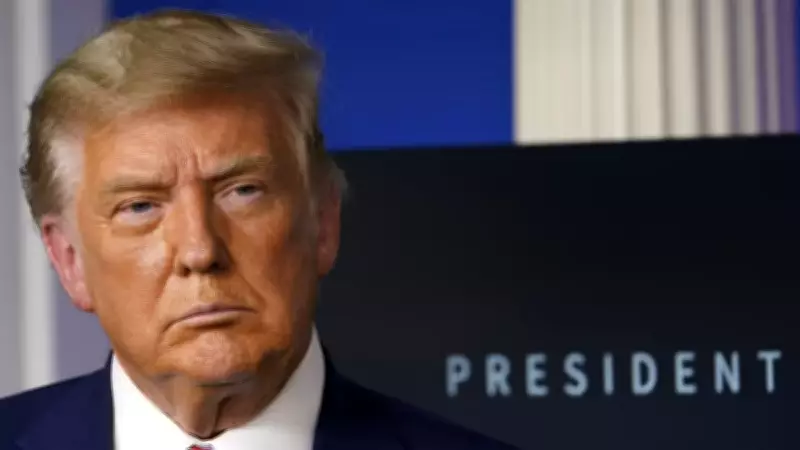
Trump Advocates for Sweeping 15% Global Tariff, Issues Stern Warning to Defiant Nations
In a bold economic maneuver, former United States President Donald Trump has publicly championed the implementation of a universal 15% tariff on all imported goods entering the country. This proposal emerges in the wake of a significant legal setback delivered by the Supreme Court, which recently ruled against one of his earlier protectionist policies. Trump's latest stance signals a doubling down on his America First trade agenda, aiming to reshape global commerce dynamics through aggressive fiscal measures.
Supreme Court Ruling Spurs Renewed Tariff Push
The timing of Trump's tariff announcement is particularly noteworthy, as it follows closely on the heels of a Supreme Court decision that struck down a previous executive order related to trade restrictions. Legal experts interpret this judicial blow as a constraint on presidential authority in unilaterally imposing tariffs, yet Trump appears undeterred. Instead, he has pivoted to advocate for a broader, more systematic approach, framing the 15% levy as a baseline for fair trade practices worldwide.
Economic analysts highlight that this proposal, if enacted, would represent one of the most extensive tariff regimes in modern history, potentially affecting billions of dollars in cross-border trade. The move is seen as an attempt to bolster domestic industries by making foreign products more expensive, thereby encouraging local production and consumption. However, critics warn of possible retaliatory measures from trading partners, which could escalate into a full-blown trade war.

Harsher Penalties Threatened for Non-Compliant Countries
Adding a layer of coercion to his proposal, Trump issued a stark warning to nations that might resist or circumvent the proposed tariff structure. He explicitly stated that defiant countries could face even harsher levies, suggesting a tiered system of penalties based on compliance levels. This rhetoric underscores a confrontational approach to international trade negotiations, where economic pressure is leveraged as a tool for diplomatic and economic alignment.
Trade policy specialists note that such threats could strain relations with key allies and adversaries alike, particularly with major economies like China, the European Union, and Japan. The potential for increased tariffs on specific sectors, such as technology, agriculture, or manufacturing, looms large, raising concerns about global supply chain disruptions and inflationary pressures. Trump's message emphasizes a zero-tolerance policy for what he perceives as unfair trade practices, including currency manipulation and intellectual property theft.
Global Reactions and Economic Implications
Initial reactions from international leaders and trade organizations have been mixed, with some expressing alarm over the protectionist undertones of Trump's proposal. The World Trade Organization (WTO) has reiterated its commitment to multilateral trade agreements, cautioning against unilateral actions that could undermine global economic stability. Meanwhile, financial markets have shown signs of volatility, as investors weigh the risks of heightened trade tensions and potential disruptions to international commerce.
From a domestic perspective, Trump's tariff push is likely to resonate with his political base, which has long supported efforts to reduce the U.S. trade deficit and revive manufacturing jobs. However, economists point out that tariffs often lead to higher consumer prices and could hurt American businesses reliant on imported materials. The broader impact on the global economy remains uncertain, with scenarios ranging from negotiated compromises to escalating trade conflicts that could slow economic growth worldwide.

In summary, Donald Trump's advocacy for a 15% global tariff, coupled with warnings of stricter measures for non-compliant nations, marks a significant development in international trade policy. Driven by a recent Supreme Court ruling, this proposal reflects a persistent commitment to protectionist economics, with far-reaching implications for global trade relations and economic stability. As the debate unfolds, stakeholders worldwide will closely monitor the responses from governments and markets, shaping the future of cross-border commerce in an increasingly interconnected world.





