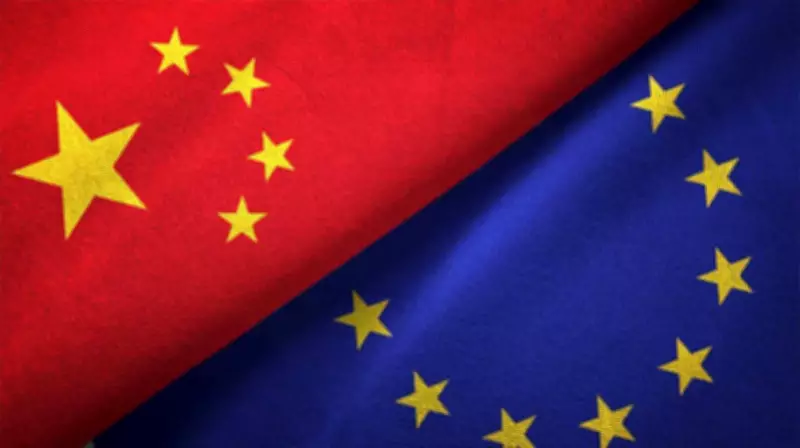
China's Long-Term Strategy Toward the EU Nears Completion
China's strategic objectives toward the European Union, as first articulated in a 1977 editorial by a Communist Party leader in the party mouthpiece People's Daily, have been largely fulfilled, according to analysis by Srikanth Kondapalli. The question now is whether the EU can successfully derisk its economic bet on Beijing.
The original editorial outlined a vision for China-EU relations that emphasized economic cooperation, technology transfers, and political alignment on key global issues. Over the decades, China has steadily advanced these goals, securing EU investment, access to advanced technologies, and a degree of diplomatic support. Today, the EU is China's largest trading partner, with bilateral trade exceeding €700 billion annually, reflecting the deep economic interdependence.
EU's Derisking Efforts Face Challenges
In response to growing concerns over supply chain vulnerabilities, technology security, and geopolitical tensions, the EU has initiated a derisking strategy. This approach aims to reduce dependence on China in critical sectors such as semiconductors, rare earths, and green technologies. However, progress has been slow due to China's entrenched position in global supply chains and the EU's internal divisions.

According to Kondapalli, "China has successfully integrated its economy with the EU, making any rapid decoupling costly and disruptive." The EU's derisking efforts are further complicated by China's state-driven economic model, which allows Beijing to offer attractive incentives to European companies, discouraging them from relocating operations.
Technology and Investment as Leverage
China has leveraged its market size and technological advancements to maintain influence over the EU. Chinese firms have acquired stakes in European high-tech companies and invested heavily in infrastructure projects under the Belt and Road Initiative. This has created a web of dependencies that the EU finds hard to untangle.
Kondapalli notes that "China's objectives, as laid out in 1977, have been met to a significant extent. The EU now faces the difficult task of balancing economic interests with strategic autonomy." The EU's recent initiatives, such as the European Chips Act and the Critical Raw Materials Act, are steps toward reducing reliance, but their impact will take years to materialize.
Geopolitical Implications and Future Outlook
The EU's ability to derisk its relationship with China will have profound implications for global trade, technology standards, and geopolitical alliances. If the EU fails to reduce dependence, it may find itself increasingly aligned with Beijing's positions on issues like climate change and global governance, potentially straining transatlantic ties.
Conversely, a successful derisking could strengthen the EU's strategic autonomy and its partnership with the United States. However, Kondapalli warns that "the EU must act decisively and collectively, or risk being locked into a subordinate relationship with China." As of now, the EU's bet on Beijing remains largely intact, with derisking more a goal than a reality.