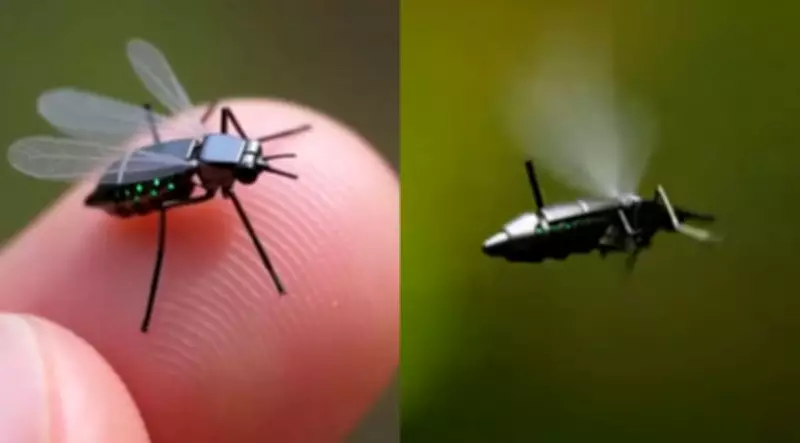
China's Mosquito Drones: A Game-Changer in Military Warfare
China has announced the development of mosquito-sized drones that could transform military warfare and covert operations forever. These miniature drones, designed to mimic the size and flight patterns of mosquitoes, are being developed by Chinese researchers for surveillance, espionage, and potentially offensive missions.
Technical Specifications and Capabilities
The drones are equipped with advanced sensors, cameras, and communication systems, allowing them to operate in swarms for coordinated attacks or intelligence gathering. Their small size makes them nearly invisible to radar and difficult to detect by the naked eye, providing a significant tactical advantage in both urban and rural combat scenarios.
According to reports, the drones can fly for extended periods, powered by micro-batteries or solar cells, and can be deployed from larger aircraft or ground vehicles. They are designed to navigate through narrow spaces, such as building vents or windows, making them ideal for covert operations.

Potential Applications in Modern Warfare
Military experts believe these drones could be used for targeted assassinations, disrupting enemy communications, or conducting surveillance without detection. In a conflict scenario, swarms of mosquito drones could overwhelm enemy defenses, gather real-time intelligence, or even deliver small payloads of explosives.
China's development of such technology aligns with its broader push for military modernization and artificial intelligence integration. The drones could also be used for civilian purposes, such as search and rescue, environmental monitoring, or agricultural surveillance.
Global Implications and Concerns
The emergence of mosquito-sized drones raises ethical and security concerns, particularly regarding privacy and the potential for misuse in covert operations. Other nations, including the United States and Russia, are also developing similar micro-drone technologies, signaling a new arms race in miniature robotics.
International treaties may need to address these advancements to prevent destabilizing effects on global security. China has not yet disclosed a timeline for deployment, but the technology is expected to be operational within the next few years.