

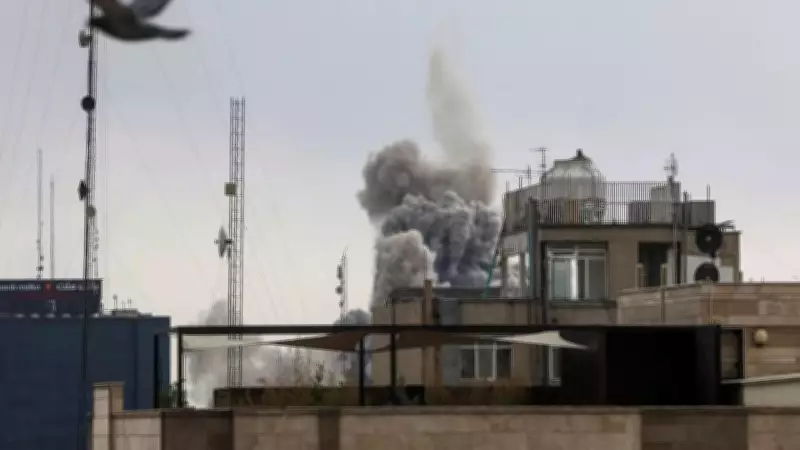
Drones Strike Near World's Busiest Airport Amid Escalating Regional Conflict
In a concerning development that highlights the expanding reach of regional hostilities, two unmanned aerial vehicles fell in the vicinity of Dubai International Airport on Wednesday, resulting in injuries to four individuals including one Indian national. The incident underscores how the ongoing conflict involving the United States, Israel, and Iran continues to threaten critical infrastructure across the Middle East.
Airport Incident Details and Casualties
The Dubai Media Office confirmed the attack through an official statement posted on social media platform X, noting that the drones came down near the airport but that air traffic operations continued normally despite the security breach. According to authorities, the attack caused minor injuries to two Ghanaian nationals and one Bangladeshi national, while an Indian citizen sustained moderate injuries requiring medical attention.
Dubai International Airport represents the primary global hub for Emirates airline and consistently ranks as the world's busiest airport for international passenger traffic. Official statistics indicate the facility handled nearly 100 million travelers during the previous calendar year, making any security incident at this location particularly significant for global aviation networks.

Broader Aviation Disruptions Across the Region
This airport incident occurs against the backdrop of widespread aviation disruptions stemming from the ongoing Middle Eastern conflict that began on February 28. Multiple regional airspaces have implemented restrictions due to heightened concerns regarding missile and drone threats, forcing numerous airlines to cancel flights, implement rerouting strategies, or accept substantial delays.
Although United Arab Emirates carriers including Emirates and Etihad Airways have gradually restored some services since the conflict's outbreak, both airlines continue operating below their normal capacity levels. The persistent security challenges have created operational uncertainties for aviation authorities and travel providers throughout the Gulf region.
Maritime Security Incidents and Energy Infrastructure Threats
Beyond aviation concerns, maritime security officials have reported multiple attacks on commercial shipping in regional waters. The United Kingdom Maritime Trade Operations documented incidents where a container ship and a bulk carrier were struck by projectiles off the UAE coastline, while another vessel sustained damage in the strategically vital Strait of Hormuz near Oman, resulting in a fire that emergency crews successfully extinguished.
The Strait of Hormuz represents one of the planet's most crucial energy transit corridors, facilitating the movement of approximately 20% of global oil supplies. The broader conflict has additionally seen attacks targeting critical energy infrastructure throughout the Gulf region, including facilities at the Saudi Aramco complex in Ras Tanura and the Ruwais Refinery in the UAE.
Major natural gas producer Qatar Energy temporarily halted production operations last week, citing the escalating security environment as justification for the precautionary measure. These developments collectively illustrate how regional hostilities are creating multidimensional challenges for transportation networks, energy security, and economic stability across the Middle East.






