

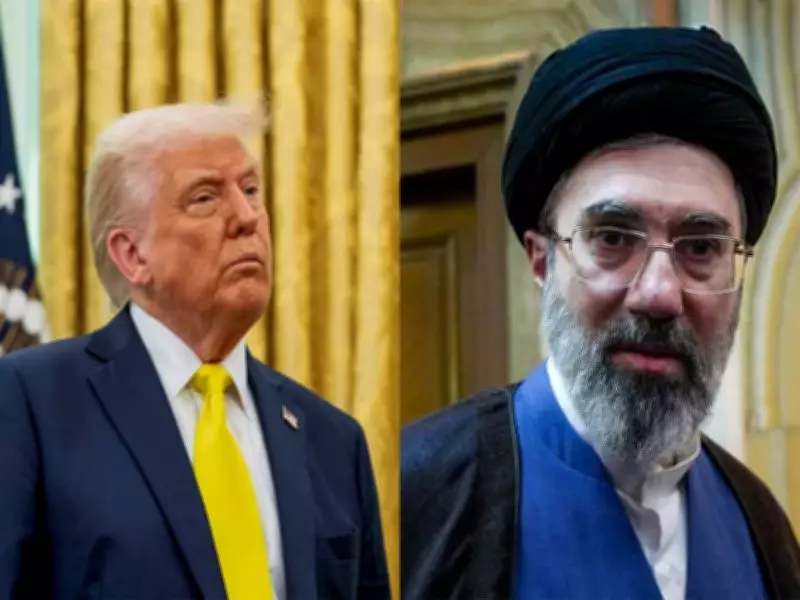
Egypt has called on the United States and Iran to seize what it describes as an "available opportunity" to reach a comprehensive agreement and end the ongoing conflict. In a statement released via social media, the Egyptian Foreign Ministry expressed satisfaction with US President Donald Trump's announcement that military strikes against Iran had been cancelled.
Egypt's Diplomatic Push
The ministry stated that Cairo hopes the current momentum will be used to resolve outstanding issues and foster regional stability. Egypt reiterated its commitment to working with regional and international partners to de-escalate tensions, highlighting its proactive role in Middle Eastern geopolitics.
Trump's Announcement
Trump declared that the United States had "ended war with Iran" and that Tehran had agreed to never pursue nuclear weapons. He made these remarks during a virtual tele-rally for Georgia Lt. Governor Burt Jones, stating that the agreement was 95% focused on nuclear non-proliferation.

Trump also claimed that a peace agreement was imminent, with Vice President JD Vance potentially attending a signing ceremony in Europe over the weekend. He asserted that the Strait of Hormuz would reopen upon signing, and that the naval blockade would remain until the deal was finalized.
Iran's Cautious Response
Iranian officials have not confirmed Trump's claims. Foreign Ministry spokesman Esmaeil Baqaei stated that Iran has not reached a final conclusion on any agreement. The Tasnim News Agency noted that Trump had previously announced an imminent deal 38 times in the past two months, urging caution.
Backchannel Negotiations
According to Axios, Qatari envoy Ali Al-Thawadi and Iranian Foreign Minister Abbas Araghchi worked late into the night to bridge differences on key issues: releasing Iran's frozen assets, reopening the Strait of Hormuz, and framing nuclear negotiations during a proposed 60-day ceasefire. While technical points were resolved, final approval from Iran's Supreme Leader Ayatollah Ali Khamenei is still pending.
Regional Context
The diplomatic efforts come amid a broader regional conflict that began on February 28. Despite a fragile ceasefire since April 8, both sides have continued exchanges of fire. Trump claimed that regional actors including Israel, Qatar, Saudi Arabia, the UAE, Turkey, and Pakistan have approved the negotiations, though Israel remains publicly skeptical.






