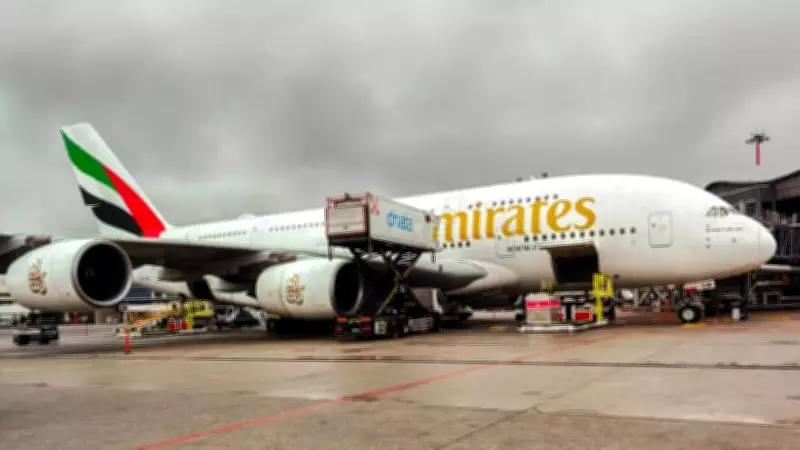
Emirates Restarts Operations Following Dubai Airport Drone Incident
The Middle East aviation sector is showing signs of stabilization after a brief but significant disruption, with Emirates confirming the resumption of its flight operations. This follows a temporary suspension triggered by security concerns in the region, specifically a drone incident near Dubai International Airport.
Dubai Airport Drone Incident and Fire Containment
Early Monday morning, the Dubai Media Office reported a drone incident in the vicinity of Dubai International Airport, the world's busiest airport for international passengers. According to the DMO, the incident impacted one of the airport's fuel tanks, leading to a fire near the fuel storage area.
Emergency response teams from Dubai Civil Defence quickly moved to the site and successfully contained the blaze. Authorities confirmed that no injuries were reported, ensuring the safety of all personnel and passengers involved.

Emirates Flight Suspension and Global Impact
Emirates, one of the world's largest international carriers, was forced to suspend flights temporarily due to this drone-related incident. The shutdown disrupted dozens of flights and created ripple effects across global travel networks, given Dubai's central role in connecting passengers between Asia, Europe, Africa, and the Americas.
The temporary suspension forced the airline to cancel or delay several services, affecting thousands of passengers who rely on Emirates' extensive global network. As operations resume, travellers are being advised to check the status of their flights before heading to the airport, as schedules may still change while normal operations are restored.
Gradual Restoration of Flight Schedule
Emirates confirmed that it has begun gradually restoring its flight schedule as airport authorities completed safety inspections and reopened operations at Dubai International Airport. The airline said it would initially operate a reduced schedule while clearing the backlog of delayed flights and ensuring passenger safety.
Industry observers note that restarting operations at a major hub airline like Emirates requires complex coordination between the airline, air traffic controllers, and airport authorities. Aircraft that were diverted or delayed during the suspension must be repositioned, while crews and ground staff must also adjust to revised schedules.
Emirates' Pivotal Role in Global Aviation
Emirates plays a pivotal role in global air travel, operating hundreds of daily flights to destinations across six continents. The airline relies heavily on Dubai International Airport as its primary hub, meaning any disruption can affect passengers across dozens of countries.
When the suspension occurred, several Emirates flights already en route to Dubai were forced to delay arrival or change course temporarily while the situation near the airport was assessed. The airline worked closely with airport authorities to ensure passenger safety while preparing to resume operations as soon as conditions allowed.
Passenger Disruptions and Recovery Efforts
During the temporary shutdown, passengers travelling with Emirates experienced cancellations, delays, and missed connections across the airline's global network. Many travellers had connecting itineraries through Dubai, one of the busiest international transit hubs in the world.
Emirates advised affected passengers to rebook flights through its website, mobile application, or customer service channels. The airline also coordinated with airport authorities to manage crowds at terminals and ensure that stranded passengers received updated information about their travel plans.
Operational Resilience and Safety Priorities
Travel analysts say that the swift restart of flights highlights the airline's operational resilience. Major international carriers typically maintain contingency plans that allow them to recover quickly from unexpected disruptions such as weather events, security incidents, or airspace closures.
Despite these challenges, Emirates emphasised that safety remains its highest priority. The airline said it would continue working with airport authorities and regulators to ensure that all flights operate under strict safety protocols as regional conditions evolve.

Return to Normal Operations and Regional Tensions
With flight operations now resuming, Emirates is focusing on clearing delayed departures and restoring its regular schedule. The airline expects services to stabilise over the coming hours as aircraft rotations return to normal and passengers complete rebooking arrangements.
Travel experts say the swift recovery demonstrates the resilience of both Emirates and Dubai's aviation infrastructure. Over the years, the airline has developed sophisticated operational systems capable of managing large-scale disruptions while maintaining passenger safety and service continuity.
For travellers worldwide, the resumption of Emirates flights signals a return to stability after a brief period of uncertainty. However, aviation authorities and airlines across the region are likely to remain on heightened alert as geopolitical developments continue to evolve.