EU Chief Hails Israel-Lebanon Agreement as Critical Step Away from Escalation
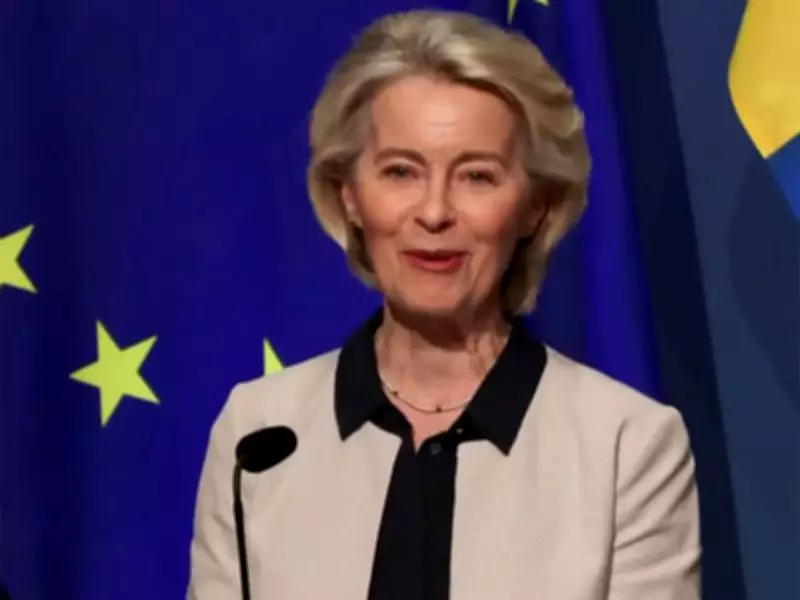
European Commission President Ursula von der Leyen has lauded the recent framework agreement between Israel and Lebanon, describing it as a critical step away from escalation. In a social media post, she stated, 'Because there can be no peace in the Middle East with Lebanon in flames. My thanks to the US for the mediation.'
Key Steps for Long-Term Peace: Disarmament and Sovereignty
Von der Leyen emphasized the necessity of regional stability, outlining core parameters required for lasting peace. She stressed that the path forward hinges on neutralizing armed militias and safeguarding Lebanese sovereignty and territorial integrity. 'Key next steps are the disarmament of non-state groups and preserving Lebanese sovereignty and territorial integrity. The EU stands ready to support this path to lasting regional stability, also with the continued delivery of much-needed humanitarian aid, with 100 million euros (USD 114 million) mobilised for the displaced,' she noted.
Trilateral Framework Agreement Signed in Washington
The diplomatic momentum follows the formal signing of the trilateral framework agreement by the United States, Israel, and Lebanon on Friday. The accord, concluded after several days of intense deliberations in Washington, represents a major breakthrough aimed at ceasing hostilities between Israel and the Iran-backed Hezbollah group. Officials from both sides termed it merely an initial step towards a wider settlement. The pact was signed at the State Department by Lebanese Ambassador Nada Moawad, Israeli Ambassador Yechiel Leiter, and US officials. Specific details of the structural framework have been kept confidential.

US Secretary of State Marco Rubio Hails Milestone
US Secretary of State Marco Rubio hailed the pact as a significant milestone but cautioned that implementation would require time. 'Today we've taken the first step in what will be a difficult journey, without a doubt, but an important and an essential and a necessary one,' Rubio stated prior to the formal signing. In a follow-up statement, Rubio noted that Washington would supervise the agreement's execution via a newly established trilateral Military Coordination Group for Lebanon. He also announced an immediate USD 100 million in humanitarian assistance for Lebanon in coordination with the United Nations, alongside more than USD 30 million under existing authorities to strengthen the Lebanese Armed Forces and help them extend state authority across the country.
Pilot Zones in Southern Lebanon: Israeli Withdrawal Linked to Hezbollah Disarmament
A crucial component of this framework involves the creation of two pilot zones in southern Lebanon. Under this mechanism, Israeli forces will pull back from limited areas captured during the conflict, permitting the Lebanese army to deploy there. However, Israeli Prime Minister Benjamin Netanyahu made it clear that the phased withdrawal would depend entirely on Hezbollah's disarmament. 'The Lebanese army will begin organising to take control of territory,' Netanyahu stated, adding that additional withdrawals would only transpire if Hezbollah's military infrastructure was dismantled. Reiterating this stance, Ambassador Leiter described the accord as 'performance-based', emphasizing that further Israeli pullbacks hinge directly on the Lebanese army successfully disarming the faction. 'To the degree that the Lebanese army performs in dismantling and disarming Hezbollah, we will proceed with additional pilot zones and the ultimate determination of an internationally recognised, secure, and agreed upon border,' he stated, before declaring: 'Iran is out, Hezbollah is out, and the road to peace between Israel and Lebanon is in.'
Lebanese Officials View Agreement as Start of Longer Process
On the Lebanese side, Ambassador Moawad characterized the agreement as the commencement of a longer process aimed at restoring Lebanon's sovereignty, ending hostilities, and allowing displaced residents to return home. Similarly, President Joseph Aoun stated that the framework should eventually enable citizens to return to 'fully liberated' areas and rebuild their homes, while firmly reaffirming that Lebanon's sovereignty could have 'no partner'.

Hezbollah Rejects Framework, Threatens Civil War
Despite these diplomatic efforts, the agreement encountered immediate pushback from Hezbollah, casting heavy doubts over its potential execution on the ground. Senior Hezbollah legislator Hassan Fadlallah dismissed the framework entirely, asserting that Beirut officials would be unable to execute the terms unless they intended to initiate a 'civil war' with American support. As reported by Lebanon's Al Mayadeen television, Fadlallah maintained that the group would oppose any efforts to strip it of its arsenal, pledging to maintain its weaponry with even greater resolve. He further stressed that the faction's resistance to the agreement was 'serious' and declared that they would prevent Lebanese officials from carrying out the agreed terms.
Ongoing Violence and Humanitarian Crisis
These fragile diplomatic developments have been reached against a backdrop of ongoing violence along the Israel-Lebanon border. Although both sides agreed to halt hostilities before negotiations resumed, Israel has maintained troops inside what it describes as a security buffer zone in southern Lebanon. The conflict originally intensified after Hezbollah launched attacks on Israel following US and Israeli strikes on Iran earlier this year. Since then, Israeli retaliatory operations have killed more than 4,000 people in Lebanon and displaced more than one million, according to Lebanese authorities.