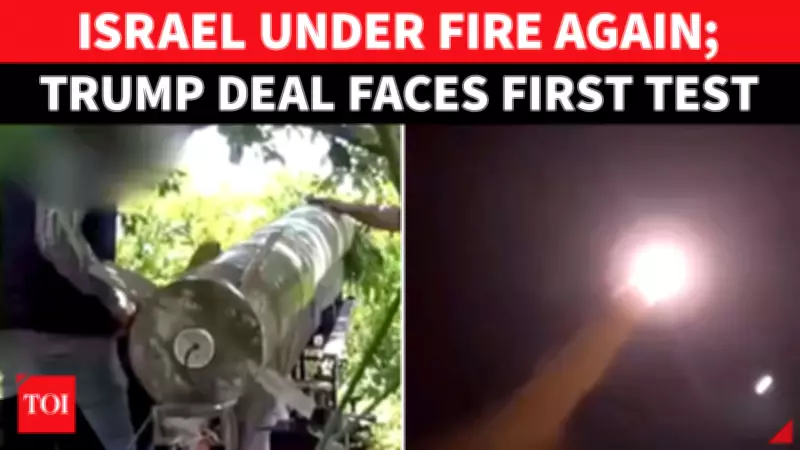
The limits of international diplomacy are being tested in real-time as fresh combat has erupted in southern Lebanon, threatening the fragile progress of regional peace efforts. Just as high-level negotiators were finalizing the historic U.S.-Iran peace framework, Hezbollah launched a rocket barrage targeting Israeli troops operating inside sovereign Lebanese territory. This attack triggered the activation of Israel Defense Forces (IDF) air defense systems, which successfully intercepted the incoming projectiles.
Israel Confirms No Casualties, Retaliates with Airstrikes
Israel confirmed that there were no casualties from the rocket attack, as the Iron Dome system effectively neutralized the threat. In response, the IDF launched immediate retaliatory airstrikes aimed at destroying the launch sites used by Hezbollah. The strikes were precise and targeted military infrastructure linked to the militant group.
Hezbollah Vows Continued Resistance
Hezbollah declared that armed resistance will continue unabated until Israeli troops execute a total withdrawal from Lebanese soil. The group's statement emphasized that its operations are a response to what it calls ongoing Israeli aggression and occupation of Lebanese territory. This stance underscores the deep-rooted tensions that persist despite broader diplomatic initiatives.

Regional Diplomacy Under Strain
The escalation highlights Lebanon's emergence as a key challenge to regional diplomacy. The U.S.-Iran peace framework, which aims to de-escalate tensions across the Middle East, now faces a significant hurdle as Hezbollah's actions threaten to unravel progress. International mediators are closely monitoring the situation, urging restraint from both sides to prevent a wider conflict.
Hezbollah's Military Capabilities
Hezbollah is a heavily armed Shiite militant group backed by Iran, with a substantial rocket arsenal capable of striking deep into Israeli territory. The group's involvement in the conflict adds a complex layer to regional dynamics, as it operates both as a political party in Lebanon and a military force with significant influence.
Impact on Civilians
The renewed clashes have raised concerns for civilian populations on both sides of the border. Residents in southern Lebanon have reported hearing explosions and seeing plumes of smoke from the airstrikes, while communities in northern Israel remain on high alert for potential rocket fire. Humanitarian organizations are calling for an immediate cessation of hostilities to protect innocent lives.
International Response
The United Nations Interim Force in Lebanon (UNIFIL) has urged all parties to exercise maximum restraint and adhere to Security Council Resolution 1701, which calls for the cessation of hostilities and the disarmament of militias. The United States and European Union have also condemned the rocket attacks and expressed support for Israel's right to self-defense, while urging a return to diplomatic channels.
As the situation evolves, the world watches closely to see whether diplomacy can prevail over the cycle of violence that has long plagued the region.