

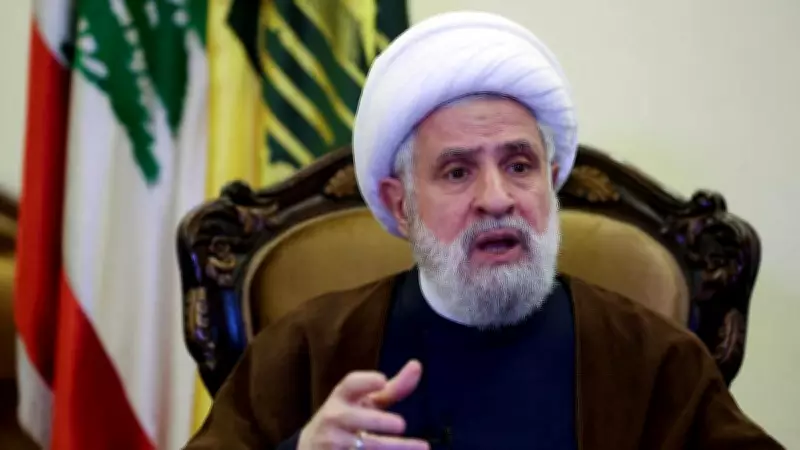
Hezbollah Rejects US-Brokered Security Deal
Hezbollah has formally rejected the US-brokered security agreement between Israel and Lebanon, denouncing it as a 'surrender' and warning that any attempt to tie Israel's withdrawal from southern Lebanon to the group's disarmament crosses 'red lines.' The statement, issued by a senior Hezbollah official on Friday, escalates tensions in the region and casts doubt on the viability of the deal.
Details of the Rejection
In a press briefing in Beirut, Hezbollah's deputy secretary-general Naim Qassem declared that the group would not accept any arrangement that compromises its military capabilities. 'This deal is a surrender to Israeli demands,' Qassem said. 'Linking the withdrawal of occupation forces to our weapons is unacceptable and crosses our red lines.' The agreement, brokered by the United States over several months, aimed to stabilize the border region by securing Israel's full withdrawal from disputed areas in exchange for Hezbollah's disarmament and demobilization.
Background of the Agreement
The proposed deal, announced earlier this week, sought to implement UN Security Council Resolution 1701, which ended the 2006 war between Israel and Hezbollah. Under the terms, Israel would pull back from occupied positions in southern Lebanon, while the Lebanese army would deploy to prevent Hezbollah from operating near the border. The US mediator had described it as a 'historic opportunity' for lasting peace. However, Hezbollah's rejection underscores the deep mistrust between the parties.

Impact and Reactions
Lebanese Prime Minister Najib Mikati expressed disappointment but stressed that the government remains committed to the deal. 'We cannot have two armies in Lebanon,' he said. Analysts warn that Hezbollah's stance could lead to renewed hostilities. 'This rejection effectively kills the agreement,' said Dr. Rami Khouri, a political analyst at the American University of Beirut. 'Without Hezbollah's consent, the Lebanese state cannot enforce disarmament.' The US State Department has not yet commented, but officials earlier had expressed optimism about the deal's prospects.
Regional and International Implications
The rejection has broader implications for Middle East diplomacy. Israel's security cabinet is scheduled to meet on Sunday to discuss its next steps. Israeli Defense Minister Yoav Gallant stated that 'Israel will not tolerate a Hezbollah armed presence on its border.' Meanwhile, Iran, Hezbollah's main backer, praised the group's defiance. 'Hezbollah's decision is a victory for resistance,' said Iranian Foreign Ministry spokesman Nasser Kanaani. The United Nations Interim Force in Lebanon (UNIFIL) urged all parties to exercise restraint and return to dialogue.
What Happens Next?
With the deal in jeopardy, the focus now shifts to whether the US can salvage negotiations or if the region faces a new cycle of violence. Hezbollah's military capability, estimated at over 100,000 rockets, remains a key concern for Israel. The Lebanese army, despite its readiness to deploy, lacks the capacity to disarm Hezbollah without its cooperation. As tensions rise, the international community calls for renewed talks, but the path forward remains uncertain.






