

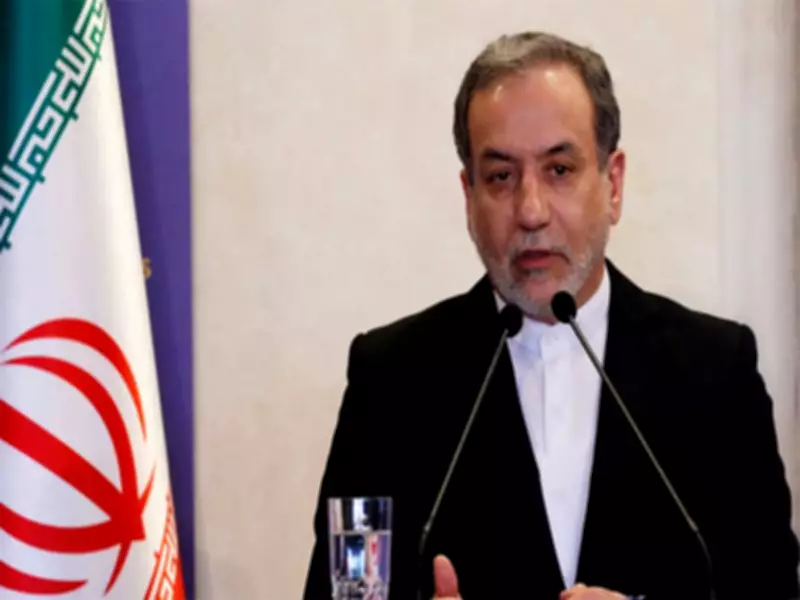
Iranian Foreign Minister Condemns US 'America First' Stance in Scathing Critique
In a sharp rebuke of American foreign policy, Iranian Foreign Minister Abbas Araqhchi has launched a verbal assault on the United States, accusing it of hypocrisy and aggression under the guise of its "America First" doctrine. Araqhchi's comments come at a time of heightened geopolitical friction in the Middle East, where US actions have often been a focal point of international scrutiny and debate.
Accusations of Regime-Focused Warfare
Araqhchi specifically targeted the US for what he described as launching wars primarily to bolster or install foreign regimes that align with its strategic interests. He argued that this approach starkly contradicts the professed ideals of the "America First" policy, which ostensibly prioritizes domestic concerns over international entanglements. According to the Iranian diplomat, such military interventions reveal a deeper agenda of exerting control and influence abroad, rather than genuine national security imperatives.
The timing of these remarks is particularly significant, as they emerge against a backdrop of ongoing tensions between Iran and the US, including disputes over nuclear agreements, sanctions, and regional proxy conflicts. Araqhchi emphasized that Iran views these actions as destabilizing and a threat to sovereignty in the region, calling for a reevaluation of US foreign policy to foster peace and stability instead of conflict.

Context of US-Iran Relations
Historically, relations between the United States and Iran have been fraught with hostility, dating back to the 1979 Iranian Revolution and the subsequent hostage crisis. In recent years, tensions have escalated due to the US withdrawal from the Iran nuclear deal in 2018 and the imposition of stringent economic sanctions. Araqhchi's critique taps into long-standing Iranian grievances, portraying the US as an imperialist power that uses military force to shape global politics to its advantage.
This diplomatic spat underscores the broader ideological clash between Iran's anti-Western stance and America's role as a global superpower. Analysts note that such rhetoric from Iranian officials is not uncommon, but it gains added weight amid current geopolitical uncertainties, including conflicts in Syria, Yemen, and Iraq, where both nations have competing interests.
Implications for Regional Stability
The Iranian Foreign Minister's statements highlight concerns about the potential for further escalation in the Middle East. By accusing the US of warmongering for regime change, Araqhchi aims to rally domestic and international support against American policies, positioning Iran as a defender of regional autonomy. This narrative could influence diplomatic efforts and military posturing in the area, potentially complicating peace initiatives and increasing the risk of confrontation.
In response, US officials have typically dismissed such criticisms as propaganda, reiterating their commitment to protecting American interests and allies. However, Araqhchi's remarks add to a growing chorus of global voices questioning the consistency and ethics of US foreign interventions, especially under the "America First" banner.
As the situation evolves, observers warn that continued verbal volleys could harden positions on both sides, making dialogue more challenging. The international community watches closely, hoping for de-escalation and a return to diplomatic channels to address the complex issues at hand.






