

Iranian President Issues Apology for Regional Strikes Amid Escalating Conflict
In a significant development, Iranian President Masoud Pezeshkian publicly apologized on Saturday for Iran's recent military strikes on neighboring countries that are allied with the United States. This apology comes as the Middle East conflict enters its second week, with tensions running high across the region.
Pezeshkian's Assurance of No First Strike Policy
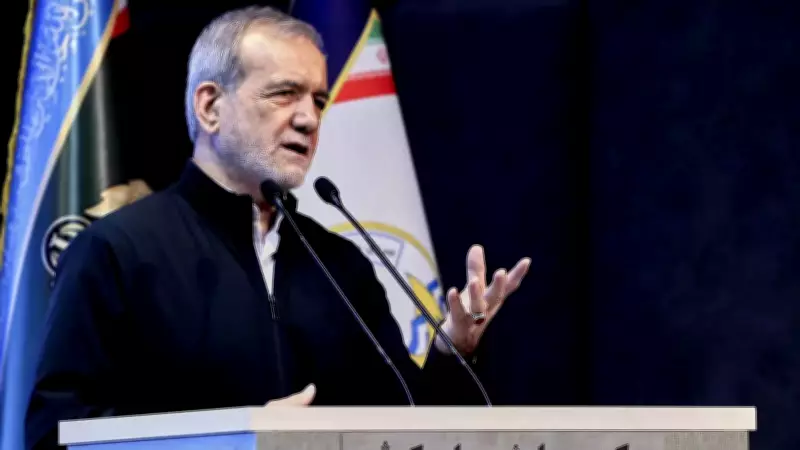
During a speech broadcast on state television, President Pezeshkian made a firm declaration regarding Iran's future military actions. He stated, "I must apologize on my own behalf and on behalf of Iran to the neighbouring countries that were attacked by Iran. The interim leadership council agreed yesterday that no more attacks will be made on neighbouring countries and no missiles will be fired unless an attack on Iran originates from those countries." This statement, reported by AFP, underscores a shift in Iran's stance, emphasizing a defensive posture rather than offensive maneuvers.
Background of the Interim Leadership and Conflict Origins
President Pezeshkian is currently serving as one of three members of an interim leadership council that is governing the Islamic Republic. This council was established following the killing of Supreme Leader Ayatollah Ali Khamenei in joint US-Israel strikes on February 28. The operation that eliminated Khamenei has been identified as the trigger for the ongoing regional conflict, which has seen Iran targeting Gulf states that host American military bases, further complicating the geopolitical landscape.

Rejection of US Demands and Internal Military Dynamics
In addition to the apology, President Pezeshkian strongly rejected demands from US President Donald Trump for what he termed "complete surrender." He asserted, "Iran's enemies must take their wish for the unconditional surrender of the Iranian people to their graves," highlighting Iran's resolve to resist external pressures. Meanwhile, insights into Iran's military operations were provided by Foreign Minister Abbas Araghchi, who suggested that the elite Islamic Revolutionary Guard Corps (IRGC) are currently operating "independently" and in an "isolated" manner due to the absence of the supreme leader. Araghchi explained to Al Jazeera, "We have already instructed our armed forces to be careful about the targets they choose. In fact, our military units are now operating independently and somewhat isolated, acting based on general instructions provided to them in advance." This revelation points to potential challenges in command and control within Iran's military structure during this turbulent period.
Implications for Regional Stability
The apology and new policy announcement by President Pezeshkian could have significant implications for regional stability. By pledging not to attack neighboring countries unless provoked, Iran may be attempting to de-escalate tensions and reduce the risk of broader conflict. However, the ongoing operations by the IRGC and the rejection of US demands indicate that underlying hostilities persist. The situation remains fluid, with the international community closely monitoring developments as the conflict continues to unfold.






