

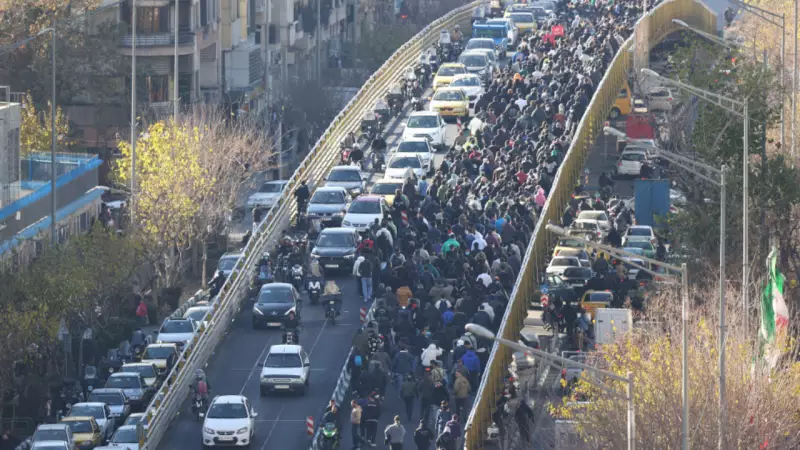
Iranian security forces deployed tear gas to break up demonstrations at Tehran's historic Grand Bazaar on Tuesday, amid a widening crackdown on nationwide protests fueled by a severe economic crisis. According to rights groups, the unrest has claimed at least 27 lives, marking the most significant wave of dissent to hit the Islamic Republic in three years.
Economic Despair Ignites Widespread Anger
The protests, which began on December 28, were initially sparked by merchants shutting down the key Tehran bazaar. The action was a direct response to the plummeting value of the Iranian rial, which hit a fresh record low of around 1.47 million to the US dollar on Tuesday. This economic freefall has squeezed ordinary Iranians, pushing the cost of living to unbearable levels and driving the protest movement from the capital into western regions home to Kurdish and Lor minorities.
Norway-based Iran Human Rights (IHR) reported that among the 27 fatalities since the unrest began are five minors under the age of 18. Iranian authorities have countered by stating that members of the security forces have also been killed, including a policeman shot dead on Tuesday in Malekshahi.

A Serious Challenge to the Leadership
This protest wave represents the most serious challenge to Iran's leadership since the 2022–2023 nationwide protests triggered by the death of Mahsa Amini. While the current unrest has not yet reached the scale of that movement, it poses a fresh test for 86-year-old Supreme Leader Ayatollah Ali Khamenei, coming amid a deepening economic crisis and months after a tense conflict with Israel.
Social media footage from the bazaar showed demonstrators scattering into alleyways as tear gas filled the air. Chants heard in videos included "freedom", "shameless", and more direct political slogans like "Pahlavi will return" and "Seyyed Ali will be overthrown," referencing the pre-1979 monarchy and Khamenei himself. In Abdanan in western Iran, large crowds were seen marching and chanting, "This is the last message, the entire regime is the target."
Crackdown and International Concern
The government's response has been firm. While President Masoud Pezeshkian's administration has announced modest monthly payments to ease hardship, the judiciary has warned there will be no leniency for what it labels "rioters." Official media acknowledge at least 13 deaths, including security personnel.
Rights groups paint a grimmer picture. IHR states that over 1,000 people have been arrested nationwide and accuses security forces of killing at least six protesters in a single incident on Saturday in Ilam province. Both IHR and Amnesty International have alleged that authorities raided hospitals in Ilam and Tehran to detain injured protesters, a move Amnesty said shows how far authorities will go to crush dissent. President Pezeshkian has ordered an investigation into the events in Ilam province.
As the protests enter their tenth day, the combination of economic despair, regional tensions, and a population increasingly willing to voice dissent sets the stage for continued instability. The world watches to see if this movement will subside or grow into another major confrontation between the Iranian people and their rulers.






