

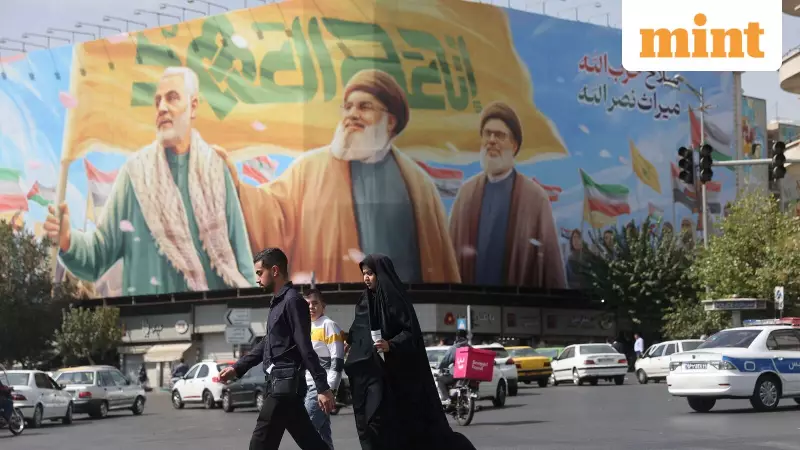
Iran has channeled hundreds of millions of dollars to the Lebanese militant group Hezbollah through money exchange businesses in Dubai over the past year, according to people familiar with the matter. This financial pipeline represents Tehran's latest effort to fund its key regional proxy after traditional smuggling routes through Syria were disrupted.
Hezbollah's Financial Crisis Post-Conflict
The US-designated terrorist organization faces urgent financial needs following its bruising conflict with Israel last year. Hezbollah requires substantial funds to rebuild its military capabilities, reconstruct destroyed homes, and provide stipends for fighters killed or wounded during the two-month war that severely damaged the group's infrastructure.
Israel's intensive air campaign in 2024 significantly degraded Hezbollah's fighting capacity while imposing heavy financial burdens. The group, once considered the world's best-armed nonstate militia, has promised extensive reconstruction efforts while simultaneously attempting to rearm and expand recruitment.

Dubai's Role in Iranian Financial Networks
According to sources including a senior US official, Iran has increasingly relied on Dubai-based financial channels after facing multiple obstacles elsewhere. The collapse of Syria's Iran-aligned government disrupted traditional smuggling routes, while Lebanese authorities have intensified crackdowns on cash couriers at Beirut airport.
The funding mechanism involves oil sale revenues being directed to Iran-linked exchange shops, private companies, and businessmen in Dubai. These funds are then transferred to Lebanon using the Hawala method - a centuries-old trust-based system where money deposited with a dealer in Dubai is paid out by a counterpart in Lebanon, with accounts settled later.
The US Treasury Department revealed in early November that Iran's Quds Force had transferred more than $1 billion to Hezbollah since January, primarily through money exchange companies. This led to sanctions against three Hezbollah operatives.
International Response and Ongoing Challenges
A UAE official stated the country remains committed to preventing illicit financial activities and collaborates with international partners to disrupt such networks. This comes after the UAE was removed from the Financial Action Task Force's "gray list" in 2024, following significant improvements in anti-money laundering oversight.
Meanwhile, the ceasefire agreement ending the Israel-Hezbollah conflict requires Lebanon to secure its entry points and prevent arms flow to militias. Lebanon has implemented measures including banning direct flights from Iran and enhancing airport screening.
In response to tighter controls, Iran has adapted by sending larger numbers of travelers carrying smaller amounts of cash or jewelry that avoid declaration requirements. This cat-and-mouse game underscores the persistent challenge facing US and Israeli efforts to curb Hezbollah's financial resurrection.
The US has also pressured Lebanon to shutter Hezbollah's key financial institution, Al-Qard Al-Hassan, a sanctioned entity operating outside central bank oversight. Additionally, Washington successfully opposed Lebanese government plans to provide disability payments to people injured in Israel's pager attack targeting Hezbollah members.
Experts note that despite the substantial funding, Hezbollah continues struggling to meet its financial obligations. "One billion used to be their entire annual budget, but after the war they need a lot more," observed Hanin Ghaddar, a senior fellow at the Washington Institute.
The group maintains additional funding sources through global networks extending to West Africa and South America, engaging in drug trading, diamond operations, and money laundering services according to Arab officials.






