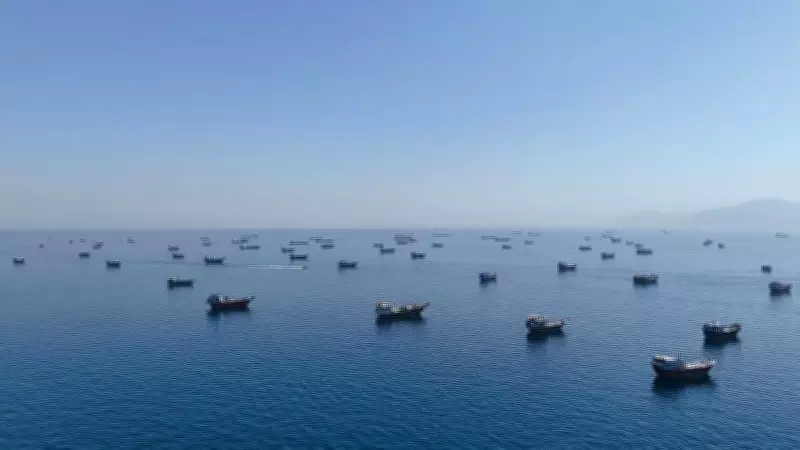
Iran has announced the closure of the strategic Strait of Hormuz, threatening any vessels attempting to traverse the waterway, following a fresh round of overnight bombardments by the United States against multiple targets within Iranian territory. The move marks a significant escalation in the ongoing conflict between the two nations, raising fears of a broader regional crisis and potential disruptions to global oil supplies.
Announcement and Immediate Aftermath
In a statement released early Thursday, the Iranian Revolutionary Guard Corps declared that the Strait of Hormuz, a vital chokepoint for approximately one-fifth of the world's oil transit, is now closed to all maritime traffic. The statement warned that any vessel ignoring the closure would face severe consequences, including potential military action. The announcement came just hours after the US military conducted a series of airstrikes on what it described as 'Iranian military infrastructure' linked to recent attacks on American assets in the region.
US Bombardment Details
The US Central Command confirmed that the strikes targeted multiple facilities in southern and central Iran, including air defense systems, missile storage sites, and command centers. The operation was described as a 'defensive measure' in response to what the Pentagon called 'imminent threats' from Iran against US forces and allies. No immediate casualty figures were released, but Iranian state media reported explosions in several provinces, including Fars and Isfahan.

Global Reaction and Concerns
The closure of the Strait of Hormuz has sent shockwaves through global markets, with oil prices surging by more than 8% in early trading. The United Nations Security Council has called for an emergency session to address the crisis, while several nations, including India, China, and European Union members, have urged restraint and de-escalation. The International Maritime Organization has advised all vessels to avoid the area until further notice.
Historical Context and Strategic Importance
The Strait of Hormuz, located between Iran and Oman, connects the Persian Gulf to the Gulf of Oman and the Arabian Sea. It is a critical artery for global energy supplies, with an estimated 17 million barrels of oil passing through daily. Iran has previously threatened to close the strait in times of tension, but this is the first time it has actually implemented such a blockade. Analysts warn that a prolonged closure could lead to a severe global economic downturn, particularly affecting oil-dependent economies.
Military and Diplomatic Implications
The US Navy's Fifth Fleet, based in Bahrain, has announced it is increasing its presence in the region to ensure freedom of navigation. However, any attempt to force the strait open could lead to direct military confrontation between US and Iranian forces. Diplomatic efforts are underway, with Qatar and Oman offering to mediate, but both Washington and Tehran have so far shown little willingness to back down. The situation remains highly volatile, with the potential to spiral into a wider conflict involving regional proxies and allies.