

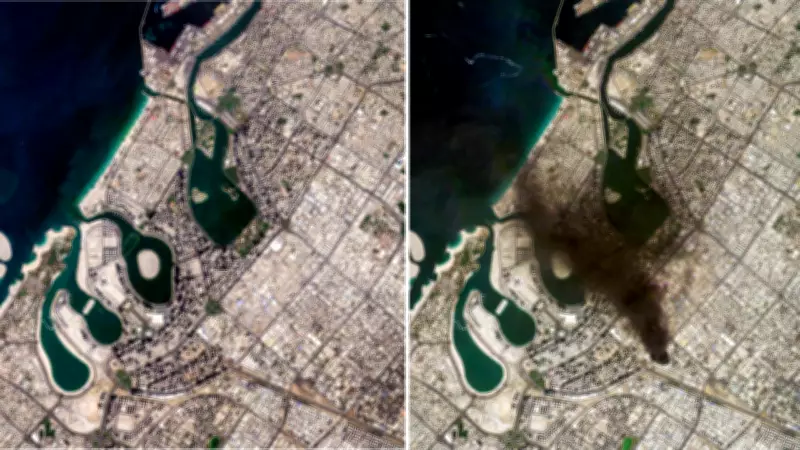
Iran Unleashes Retaliatory Strikes on Dubai and Gulf Region After Khamenei Killing
The ultramodern city of Dubai, known for its lavish skyscrapers and opulent lifestyle, has been drawn into the escalating turmoil in the Middle East. This development follows a coordinated attack by the United States and Israel that resulted in the death of Iran's Supreme Leader Ayatollah Ali Khamenei and several other top leaders. In response, grief-stricken Iran launched heavy retaliatory strikes, targeting American military bases across the Gulf, Israel, and major commercial hubs in the United Arab Emirates, including Dubai and nearby Sharjah.
Satellite Images Reveal Devastation in Dubai
Satellite imagery has captured the stark aftermath of the Iranian strikes, comparing pre- and post-attack scenes. The images show thick black fumes rising into the sky, turning Dubai's iconic skyline grey due to heavy explosions and blasts. For years, Dubai's skyline has symbolized glamour and modern city life, largely insulated from the unrest common in the Arab world. However, this attack has shattered that perception, plunging the region into a state of crisis.
Iconic Landmarks Targeted in Symbolic Attacks
Among the key targets in Dubai was the opulent, sail-shaped Burj Al Arab hotel, a long-standing emblem of the city's wealth and ambition perched along the Gulf coast. Iranian missiles set parts of this iconic structure ablaze, transforming it into a symbol of the broader regional conflict. Additionally, explosions struck a five-star hotel on the upscale Palm Jumeirah, a man-made island frequented by the global elite. These attacks carried strong symbolic value, highlighting the vulnerability of even the most secure and prosperous areas.

Critical Infrastructure Hit, Threatening Economic Stability
The strikes also impacted vital infrastructure, with Dubai International Airport, the world's busiest for international passengers, and Jebel Ali Port being hit. Official estimates indicate that these two facilities account for approximately 60 percent of Dubai's revenues, raising concerns about significant economic disruption. The attacks have shaken residents and expatriates alike, many of whom viewed the UAE as a relative safe haven from regional conflicts.
Eyewitness Accounts and Interceptor Systems in Action
Dalia, a 33-year-old Lebanese expatriate, was at the popular Kite Beach near the Burj Al Arab when interceptor systems began destroying incoming missiles and drones in the sky. Debris from an intercepted drone reportedly ignited a fire near the base of the hotel's facade, adding to the chaos and fear among onlookers. This incident underscores the intensity of the conflict and the challenges in defending against such coordinated assaults.
The situation remains fluid as the US and Israel continue their military operations in Iran, with Israeli jets also striking Hezbollah targets in Lebanon's Beirut. Hezbollah has retaliated by firing at Israel, and the US has released video footage of strikes on IRGC headquarters. In a notable development, Israel used its Iron Beam system to intercept rockets midair for the first time, showcasing advanced defense capabilities amid the escalating violence.






