

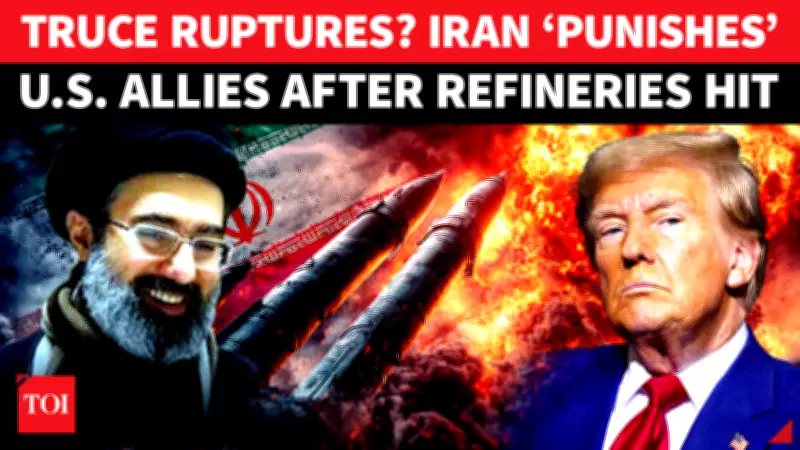
Iran Escalates Tensions with Missile and Drone Attacks on UAE and Kuwait
In a significant escalation of hostilities, Iran has initiated a wave of missile and drone strikes targeting the United Arab Emirates (UAE) and Kuwait. This aggressive move comes as a direct retaliation for recent attacks on Iranian oil facilities, further destabilizing an already fragile ceasefire in the Middle East. The situation underscores the volatile nature of regional conflicts, with officials warning of a high risk of rapid escalation.
Details of the Strikes and Defensive Responses
According to reports, Iran launched approximately 17 missiles and numerous drones in coordinated attacks. The UAE's air defence systems were activated, successfully intercepting dozens of incoming projectiles. Meanwhile, Kuwait faced extensive drone assaults that specifically targeted critical infrastructure, raising concerns about potential disruptions to essential services and economic stability in the region.
Iranian state media has officially claimed responsibility for these strikes, labeling them as retaliatory actions. They have emphasized that there is no confirmed involvement from Israel or the United States in this latest offensive. This assertion adds a layer of complexity to the geopolitical landscape, as it isolates the conflict to regional actors while heightening tensions among neighboring countries.

Additional Military Engagements and Ceasefire Concerns
In a related development, Iran's Revolutionary Guard reported shooting down a Hermes 900 drone over Fars Province. This incident further illustrates the ongoing military engagements and the precarious state of the ceasefire. Officials from various nations have expressed grave concerns, noting that the ceasefire is showing significant cracks and remains highly unstable.
The risk of a broader conflict looms large, as these attacks could provoke counter-responses from affected nations or their allies. The international community is closely monitoring the situation, with calls for de-escalation and diplomatic efforts to prevent a full-scale war. The targeting of critical infrastructure in Kuwait, in particular, highlights the strategic nature of these strikes, aimed at weakening economic and operational capabilities.
Implications for Regional Stability and Future Outlook
This escalation marks a dangerous turn in Middle Eastern politics, potentially undermining peace initiatives and ceasefire agreements. The involvement of drones and missiles in such attacks reflects the evolving nature of modern warfare, where asymmetric tactics are increasingly employed to achieve strategic objectives. As tensions rise, the need for robust international mediation becomes ever more urgent to avert a catastrophic conflict.
In summary, Iran's retaliation through missile and drone strikes on the UAE and Kuwait has severely jeopardized the fragile ceasefire in the region. With no immediate resolution in sight, the situation demands vigilant observation and proactive diplomatic interventions to restore stability and prevent further hostilities.






