

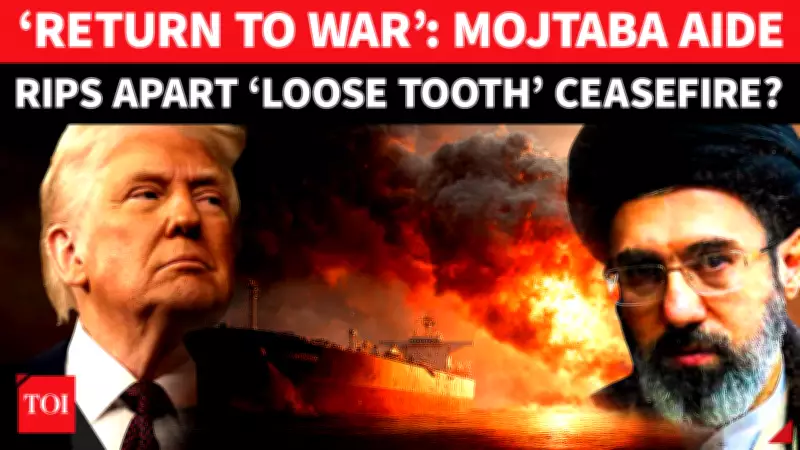
Iran Issues Stark Warning, Threatens to Exit Ceasefire Over Strait of Hormuz Dispute
In a dramatic escalation of Middle East tensions, Iran has issued a severe warning that it may abandon the current ceasefire agreement, directly challenging the United States and its allies. The statement, delivered by a senior Iranian official, underscores the fragile nature of the truce and raises alarming prospects of a return to open warfare.
Official Warns Ceasefire Is a 'Loose Tooth' That May Need Removal
Ebrahim Rezaei, the spokesperson for Iran's National Security Commission, declared that the ceasefire should not be extended unless Iran's sovereign rights, particularly concerning the strategic Strait of Hormuz, are fully acknowledged and respected. Rezaei characterized the current pause in hostilities as a 'loose tooth' that might require extraction, suggesting the agreement is unstable and temporary.
He accused rival nations of exploiting the ceasefire period to regroup and rearm their military forces, thereby undermining the spirit of the truce. This accusation points to a deepening mistrust and highlights the ongoing strategic maneuvers in the region, which continue to fuel instability.

Final Warning to US: No Breathing Space, Back to War
The Iranian official's remarks included what has been interpreted as a final warning to the United States, emphasizing that there is 'no breathing space' for further negotiations without concrete concessions. The statement explicitly linked the continuation of peace to the recognition of Iran's claims over the Strait of Hormuz, a critical global oil chokepoint.
This ultimatum intensifies the geopolitical standoff, as control over the Strait of Hormuz is a longstanding point of contention between Iran and Western powers. Any disruption in this vital maritime route could have severe repercussions for global energy supplies and economic stability.
Rising Fears of Renewed Conflict in the Middle East
The warning has sparked widespread concern among international observers and regional stakeholders, who fear that escalating tensions could quickly spiral back into full-scale conflict. The Middle East has been a hotspot for geopolitical rivalries, and this development threatens to undo recent diplomatic efforts aimed at de-escalation.
Analysts note that Iran's assertive posture may be a strategic move to leverage its position in ongoing negotiations, but it also risks miscalculation that could lead to military confrontations. The situation remains fluid, with all parties closely monitoring each other's next steps.
Broader Implications for Global Security and Diplomacy
This incident underscores the complex interplay of national interests, security concerns, and diplomatic maneuvering in the Middle East. Key points to consider include:
- The strategic importance of the Strait of Hormuz for international trade and energy security.
- The role of external powers, particularly the US, in mediating or exacerbating regional disputes.
- The potential for ceasefire agreements to unravel under pressure from unresolved grievances and military build-ups.
As tensions mount, the international community is urged to engage in proactive diplomacy to prevent a relapse into violence. The coming days will be critical in determining whether dialogue can prevail over confrontation or if the region is indeed headed back to war.






