

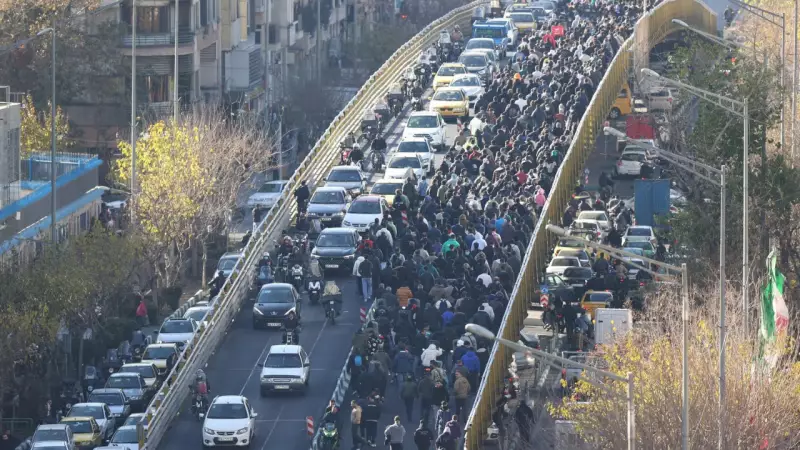
Iran entered a fourth consecutive day of major civil unrest on Wednesday, with large swathes of the country brought to a standstill by a government-declared shutdown. Authorities ordered a sudden public holiday across 21 of Iran's 31 provinces, including the capital Tehran, shuttering businesses, universities, and government offices in a move widely seen as an attempt to quell spreading demonstrations.
Economic Despair Ignites Widespread Anger
The protests ignited on Sunday within Tehran's major bazaars, where shopkeepers closed their stalls in a powerful act of defiance. The trigger was a sharp collapse in the value of the Iranian rial, skyrocketing prices, and a severe decline in living standards. Official figures place inflation above 50%, with the currency losing nearly half its value against the US dollar in 2025 alone.
By Tuesday, the movement had expanded far beyond the merchant class. University students and citizens from various walks of life in cities nationwide joined the demonstrations, voicing fury over unemployment, water shortages, and broader governance failures. This marks the most significant wave of protests since the 2022 unrest following the death of Mahsa Amini.

Confrontations and a Nation on Edge
Videos circulating on social media depicted intense clashes between protesters and security forces in urban centres including Tehran, Shiraz, Isfahan, Kermanshah, and Fasa. Protesters were heard chanting slogans like "Down with the Dictator" and "Down with Khamenei." In one of the most serious incidents, in Fasa, crowds broke through the gates of a government complex housing the governor's office, causing damage.
State media reported that a 21-year-old Basij paramilitary officer was killed in the western province of Lorestan during violent unrest, with at least 13 others injured. In Fasa, judicial officials confirmed four arrests and three police injuries but denied reports of protester fatalities. Military helicopters were seen flying over areas, a tactic opposition groups called intimidation.
Government Response: Promises and a Security Crackdown
President Masoud Pezeshkian acknowledged public anger, blaming foreign economic pressure and pledging to listen to "legitimate demands." Amid the crisis, he appointed former economy minister Abdolnaser Hemmati as the new central bank chief following Mohammad Reza Farzin's resignation.
Simultaneously, officials warned against instability. Prosecutor General Mohammad Movahedi-Azad stated that while economic protests were legitimate, damage to property or security threats would meet a "decisive response." In a signal of a hardening security stance, Supreme Leader Ayatollah Ali Khamenei appointed IRGC Brigadier General Ahmad Vahidi as deputy commander-in-chief of the Revolutionary Guards.
Security was tightened around universities in Tehran, with some shifting to online classes—a move critics labelled an effort to prevent student mobilization. Markets in major cities remained closed on Wednesday as merchants sustained a coordinated strike, expressing a willingness to bear financial losses to protest years of economic hardship.






