

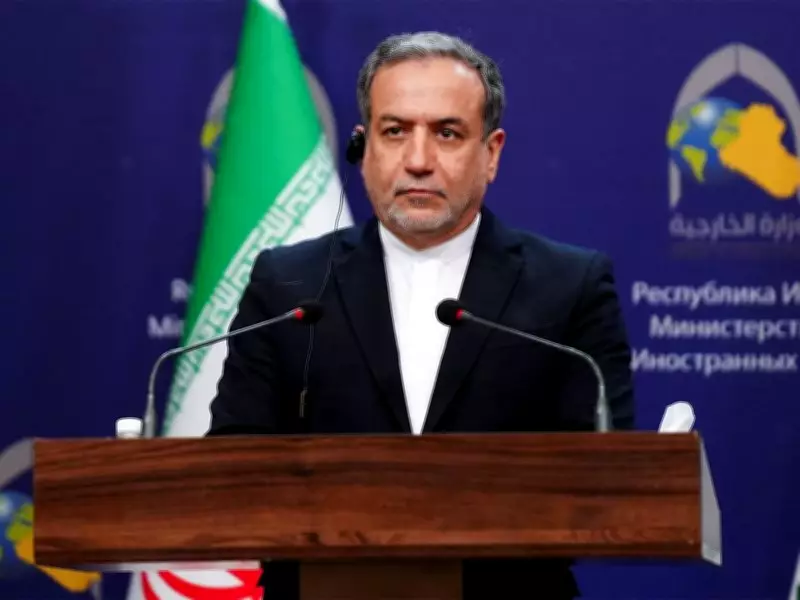
Iranian Foreign Minister Abbas Araghchi stated on Friday that nuclear negotiations with the United States will not advance unless an interim agreement is fully implemented. He further warned that the final agreement will not be signed if its terms are not met, adding that the deal could be signed remotely if approved.
Key Conditions for the Nuclear Agreement
Speaking to Iran's state broadcaster, Islamic Republic of Iran Broadcasting (IRIB), Araghchi said that after an initial agreement, the United States would be given 60 days to fulfill its commitments. He cautioned that if obligations are not met, the situation could revert to the previous status.
"If the provisions of the memorandum of understanding are not met, the final agreement will not be signed," the Iranian Foreign Minister was quoted as saying by IRIB.

Decision-Making Process and Remote Signing
Araghchi explained that the decision on the final text will be made collectively within Iran's Supreme National Security Council (SNSC). If approved, the agreement would be signed remotely, without a physical ceremony.
"After signing the initial agreement, we give the US 60 days to fulfil its duties. During this time, we may reach an understanding or extend the ceasefire; it is also possible that after 60 days, we will return to the previous situation. There are supporters and opponents of the text within Iran's SNSC, but a collective decision will be made. For now, we must wait. If approved, the agreement will be signed remotely," he added.
Concerns Over US Compliance
The Iranian minister expressed skepticism about US adherence to the deal, alleging that breaking promises is characteristic of American statesmen. He warned that Iran expects major obstacles in implementing the agreement and will take measures to prevent any loopholes for non-compliance.
"Breaking promises is in the nature of US statesmen; we must expect major obstacles in implementing the agreement. We aren't dealing with people fully committed to the deal, so Iran will block any loopholes for their non-compliance," he told IRIB.
Security Guarantees
Araghchi emphasized that Iran does not rely on international bodies for its security. "We do NOT rely on the Security Council, the United Nations, or trans-regional coalitions to guarantee our security. Our reliance is only on God, our people, and our own armed forces," he stated.
The remarks come amid ongoing negotiations between Iran and the United States over Tehran's nuclear program, with both sides seeking a diplomatic resolution. The interim agreement, if implemented, would serve as a foundation for a comprehensive final deal.






