

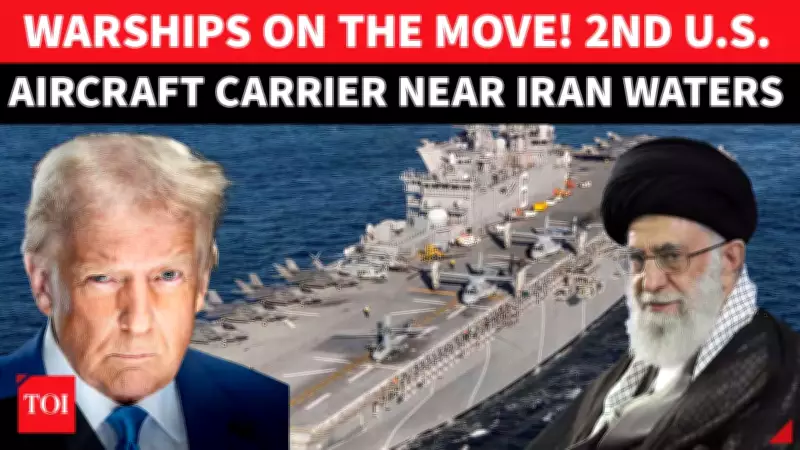
U.S. Deploys Second Aircraft Carrier to Middle East as Trump Pressures Iran on Nuclear Deal
The United States is significantly escalating its military presence in the Middle East by deploying the USS Gerald R. Ford aircraft carrier to the region. This move places a second carrier strike group, joining the USS Abraham Lincoln, in close proximity to Iran, marking a substantial show of force amid heightened diplomatic tensions.
Trump's 'Phase Two' Warning and Iran's Stern Response
President Donald Trump has intensified pressure on Tehran to secure a nuclear agreement, explicitly warning of "phase two" consequences should negotiations fail. In response, Iran issued a firm warning through Navy Commander Shahram Irani, who stated that Tehran is closely and continuously monitoring all enemy movements in the area. Commander Irani emphasized that maritime security remains a top priority for Iran's naval forces, signaling readiness to defend its interests.
Regional Fears of Escalation and Internal Unrest in Iran
Gulf nations are expressing deep concern that this military buildup could spark a wider regional conflict, destabilizing an already volatile area. Compounding the external pressure, Iran faces internal challenges as mourning ceremonies have resumed following last month's deadly crackdown on protests. This internal unrest adds another layer of complexity to the geopolitical standoff, increasing pressure on the Iranian government from within.

Background of Recent Hostilities
The current tensions are not isolated. In June 2025, Iran displayed wreckage of Israeli drones it claimed to have shot down during fighting, highlighting ongoing regional hostilities. This historical context underscores the persistent volatility in the Middle East, where military posturing and confrontations have become increasingly frequent.
The deployment of two U.S. carrier strike groups represents a clear strategic maneuver to bolster diplomatic leverage. Analysts suggest this could be a precursor to more aggressive actions if nuclear talks stall, potentially leading to a dangerous escalation. The situation remains fluid, with all parties closely watching for developments that could either ease tensions or trigger a broader confrontation.






