

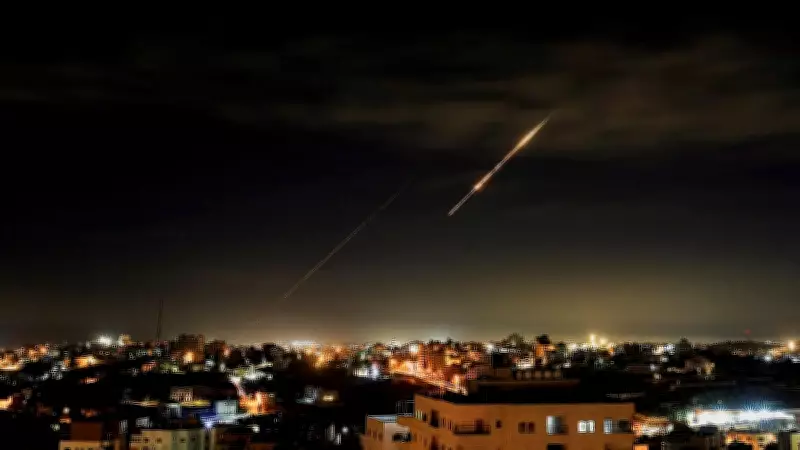
Iran's Revolutionary 'Dancing Missile' Unveiled: A Game-Changer in Modern Warfare
In a significant development that is reshaping the military landscape of the Middle East, Iran has recently introduced a groundbreaking missile system, colloquially dubbed the 'dancing missile.' This advanced weaponry represents a major technological leap, designed specifically to outmaneuver and evade sophisticated air defense systems deployed by regional adversaries and global powers.
What Exactly Is Iran's 'Dancing Missile'?
The term 'dancing missile' refers to a new class of Iranian ballistic or cruise missiles that incorporate highly advanced maneuverability capabilities. Unlike traditional missiles that follow a relatively predictable parabolic trajectory, these missiles can perform complex, erratic movements mid-flight, making them exceptionally difficult to intercept. This technology involves real-time adjustments to the missile's path, allowing it to 'dance' around defensive countermeasures.
Key features of this missile system include:

- Enhanced Agility: The missile can execute sharp turns and sudden changes in direction, confusing radar and targeting systems.
- Stealth Elements: It may incorporate materials or designs that reduce its radar cross-section, further complicating detection.
- Precision Guidance: Advanced onboard computers and sensors enable it to maintain accuracy despite its unpredictable flight patterns.
Technological Innovations and Strategic Implications
The development of the 'dancing missile' underscores Iran's growing prowess in military research and development. This innovation is not merely a symbolic achievement but a practical enhancement of Iran's deterrent capabilities. By deploying missiles that can evade interception, Iran aims to bolster its defense posture against potential threats, particularly from nations with advanced missile defense networks like Israel and the United States.
From a strategic perspective, this technology could alter regional power dynamics. It poses a direct challenge to existing air defense architectures, such as Israel's Iron Dome and the U.S.-backed systems in the Gulf, potentially forcing these countries to invest in more advanced countermeasures. This escalation in military technology highlights the ongoing arms race in the Middle East, where nations continuously seek to gain an edge through innovation.
Global Reactions and Security Concerns
The unveiling of the 'dancing missile' has elicited mixed reactions from the international community. While some analysts view it as a testament to Iran's indigenous technological capabilities, others express concern over its implications for regional stability. The ability to bypass missile defenses could embolden Iran in geopolitical standoffs, raising tensions in an already volatile region.
Moreover, this development may prompt other nations to accelerate their own missile defense research, leading to a broader technological arms race. It also underscores the importance of diplomatic efforts to address security concerns, as purely military solutions may prove insufficient in the face of such advanced weaponry.
Future Prospects and Monitoring
As Iran continues to refine and potentially deploy the 'dancing missile,' global military analysts will closely monitor its performance in tests and any operational use. The success of this technology could inspire similar developments worldwide, influencing future warfare tactics and defense strategies.
In conclusion, Iran's 'dancing missile' represents a pivotal advancement in missile technology, with far-reaching consequences for regional security and global military balance. Its ability to evade defenses marks a new chapter in the evolution of warfare, emphasizing the need for continuous innovation and strategic foresight in defense planning.






