

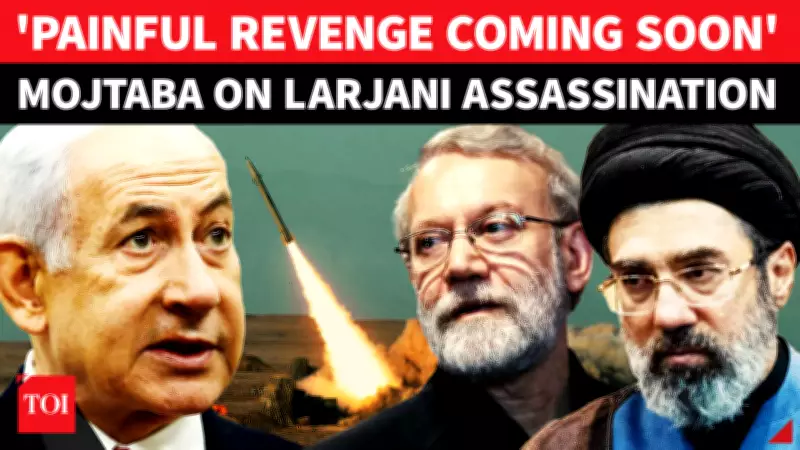
Iran's Supreme Leader Issues Stern Warning Over Larijani Assassination
In a dramatic escalation of regional tensions, Iran's Supreme Leader Mojtaba Khamenei has delivered a chilling warning to Israel, vowing swift and decisive retaliation for the assassination of senior Iranian leader Ali Larijani in recent Israeli airstrikes. The statement marks a significant hardening of Iran's position following the deadly attack that has sent shockwaves through the Middle East.
"Perpetrators Will Pay the Price Soon"
Khamenei declared with ominous certainty that "perpetrators will pay the price soon," framing the killing not as a setback but as a catalyst that would only strengthen Iran's resolve against its adversaries. The Supreme Leader emphasized that such attacks demonstrate the deep-seated hostility of Iran's enemies, who he claims are determined to undermine the nation's stability and influence in the region.
Tribute to a Key Figure
In his address, Khamenei paid solemn tribute to Ali Larijani, describing him as a highly influential figure with decades of dedicated service across Iran's complex political and security establishment. Larijani's assassination, according to Khamenei, serves as undeniable proof of the malicious intentions harbored by those opposed to Iran's sovereignty and regional ambitions.

Additional Casualties Confirmed
The Supreme Leader also confirmed the tragic deaths of other prominent Iranian figures in the same series of airstrikes, including:
- Gholamreza Soleimani, commander of the Basij paramilitary force
- Esmail Khatib, Iran's Intelligence Minister
These high-profile losses have intensified an already volatile situation, raising concerns about potential retaliatory measures and broader regional conflict. The elimination of such key security and intelligence officials represents a significant blow to Iran's operational capabilities and strategic planning apparatus.
Regional Implications
Analysts suggest that Khamenei's warning signals a dangerous new phase in the long-standing shadow war between Iran and Israel, with both nations now potentially moving toward more direct confrontation. The assassination of figures with Larijani's stature—who played crucial roles in shaping Iran's foreign policy and security strategies—creates a vacuum that could destabilize Tehran's regional networks and proxy relationships.
International observers are closely monitoring the situation, concerned that retaliatory actions could spark wider hostilities involving multiple state and non-state actors across the Middle East. The confirmed deaths of Soleimani and Khatib further complicate the security landscape, as their roles were pivotal in coordinating Iran's military and intelligence operations beyond its borders.
As tensions reach a boiling point, the international community faces renewed challenges in mediating between the two adversaries and preventing a full-scale regional conflict that could have devastating consequences for global stability and energy security.






