

Iran's Military Establishment Plays Decisive Role in New Supreme Leader's Appointment
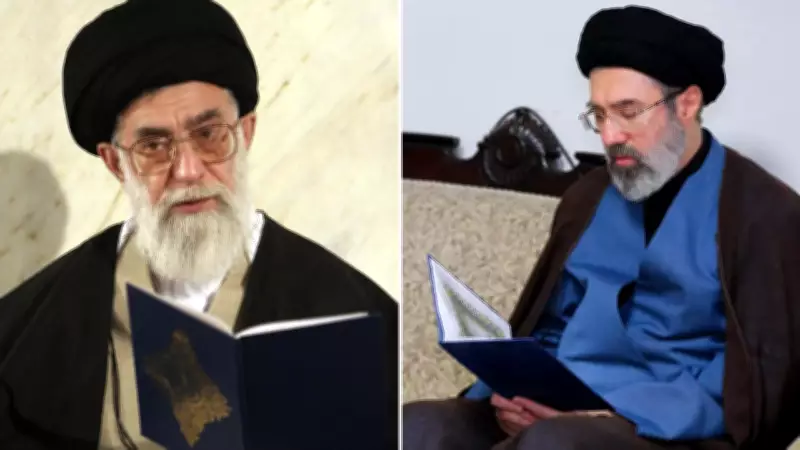
The military establishment in Iran appears to have played a decisive role in elevating the country's new supreme leader, Mojtaba Khamenei, even though his own father reportedly opposed the idea of him inheriting the post. This development comes amid ongoing regional conflicts and significant geopolitical tensions.
Controversial Succession Amid Regional Conflict
The 56-year-old cleric became the third supreme leader of the Islamic Republic following the death of his father, Ali Khamenei, who was killed in US-Israeli strikes on Tehran on February 28 during escalating regional hostilities. Iran's Assembly of Experts, the body responsible for selecting the country's supreme leader, formally announced Mojtaba's appointment several days later, but not without significant controversy and behind-the-scenes maneuvering.
According to multiple reports, the appointment followed intense pressure from Iran's Islamic Revolutionary Guard Corps (IRGC), which viewed him as a leader likely to support its hardline agenda both domestically and internationally. The Revolutionary Guards, already one of the most powerful institutions in Iran, reportedly pushed aggressively for his selection, seeing him as a more compliant leader who would endorse their policies without significant resistance.

Father's Reported Opposition to Succession
One of the most striking revelations to emerge after the leadership transition is the claim that the elder Khamenei himself did not want his son to succeed him. "In Khamenei's will, he explicitly asked Mojtaba not to be named as successor," revealed Khosro Isfahani, research director for the opposition-linked National Union for Democracy, in an interview with the New York Post.
Isfahani explained that the late supreme leader believed his son lacked the necessary experience to effectively run the Islamic Republic. "Mojtaba is an impotent young cleric who has achieved nothing in terms of political life," he stated. "All these years, he has been nothing without his father's name."
According to the report, Mojtaba had never held a formal government position before being elevated to the most powerful office in Iran. Instead, he spent much of his career working behind the scenes within his father's office, known as the beyt, where he cultivated strong connections with security and military figures.
Revolutionary Guards' Instrumental Role
Several Iranian insiders confirmed to Reuters that the Revolutionary Guards were instrumental in securing Mojtaba's appointment. Sources indicated that senior clerics and political figures initially raised objections, partly because the succession appeared hereditary and partly due to concerns that it would strengthen the military's dominance over the political system.
The opposition reportedly delayed the announcement of Mojtaba's appointment for hours, but the Guards eventually forced the issue. One insider revealed that the IRGC had directly contacted members of the Assembly of Experts, pressing them to support Mojtaba's elevation. Another source indicated that critics of the decision were warned against opposing it.
The Guards argued that the wartime situation required a rapid decision and a leader who would stand firmly against the United States and its allies. This justification helped overcome resistance from those concerned about the military's growing influence in political matters.
Potential Shift in Power Dynamics
Alex Vatanka, a senior fellow at the Middle East Institute in Washington, told Reuters that Mojtaba "owes his position to the Revolutionary Guards and as such he is not going to be as supreme as his father was." This observation highlights concerns about the new leader's independence and authority within Iran's complex political structure.
Some Iranian insiders fear this development could accelerate the transformation of the Islamic Republic into what one source described as a "military state with only a thin veneer of religious legitimacy." The elder Khamenei had spent decades balancing competing power centers—clerical elites, elected politicians, and the Revolutionary Guards—while maintaining some control over the military establishment.

With Mojtaba's rise, that delicate balance may have shifted significantly. Sources indicated to Reuters that the Guards have already expanded their influence since the outbreak of war and are likely to wield greater control over strategic decisions under the new leadership.
Background and Previous Influence
Leaked US diplomatic cables from the 2000s had previously described Mojtaba as "the power behind the robes," suggesting he wielded considerable influence within the system long before his public rise to the supreme leadership position. This behind-the-scenes experience, while not involving formal government posts, gave him extensive connections within Iran's security apparatus.
The succession occurs during a period of heightened regional conflict, with ongoing hostilities involving multiple actors in the Middle East. This context has undoubtedly influenced the succession process and the arguments made by different factions within Iran's power structure.
The appointment represents a significant moment in Iran's political history, potentially marking a shift toward greater military influence in the country's highest leadership position. How this will affect Iran's domestic policies, international relations, and the ongoing regional conflicts remains to be seen as the new supreme leader establishes his authority and navigates the complex power dynamics within the Islamic Republic.





