

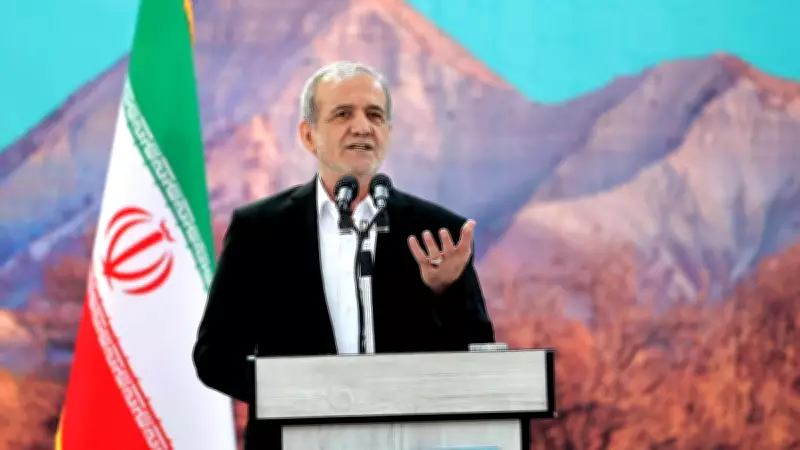
Iran's Revolutionary Guards Assert Dominance Over Government Functions
In a significant political development, Iran's Revolutionary Guards (IRGC) are now reportedly ruling the war-ravaged nation, effectively sidelining President Masoud Pezeshkian's government from executive control. This power shift has raised concerns about the centralization of authority within the country's security apparatus.
Blocking Presidential Authority and Appointments
The IRGC has taken decisive steps to undermine the government's operational capabilities by systematically blocking presidential appointments and key decisions. This interference has created a scenario where the elected administration finds itself increasingly marginalized in the day-to-day governance of Iran.
Sources indicate that the Revolutionary Guards have established a formidable security perimeter around the core of Iran's power structure. This strategic move has effectively tightened their grip on the nation's central decision-making processes, limiting the government's ability to implement policies independently.

Consolidation of Power Amid Regional Conflicts
The timing of this power consolidation is particularly noteworthy, as Iran continues to navigate complex regional conflicts and internal challenges. The IRGC's enhanced control over executive functions suggests a deliberate effort to centralize authority within the military-security establishment, potentially at the expense of civilian governance structures.
Observers note that this development could have far-reaching implications for Iran's domestic stability and international relations. The sidelining of President Pezeshkian's government represents a significant shift in the balance of power within the Islamic Republic, with the Revolutionary Guards emerging as the dominant force in national affairs.
As the situation evolves, the international community is closely monitoring these developments, which could impact diplomatic engagements and regional security dynamics in the Middle East.






