

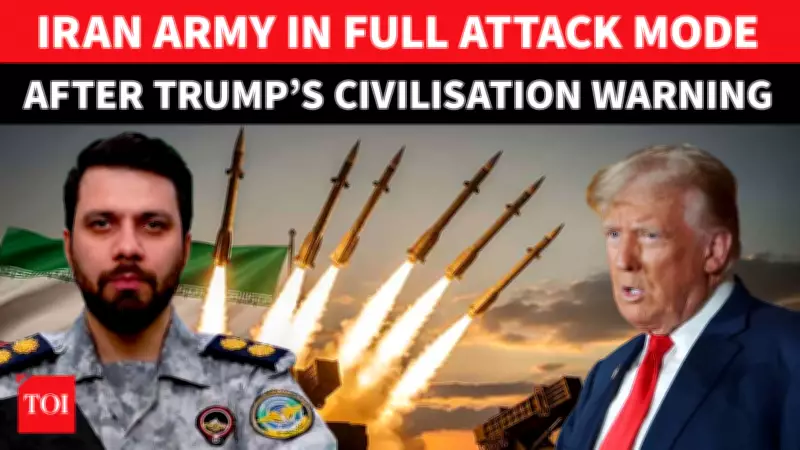
Iran Army's Shock 'Target List' Emerges Amid Trump's Threats
In a dramatic escalation of Middle East tensions, Iran has unveiled a more aggressive military posture following stark warnings from former U.S. President Donald Trump. The Islamic Revolutionary Guard Corps (IRGC) has declared it will operate without prior restraint, marking a significant strategic shift that has alarmed U.S. allies across the region.
Diplomatic Breakdown and Regional Risks
Reports indicate that diplomatic channels between Tehran and Washington have been completely severed, deepening the crisis and raising fears of imminent conflict. Trump has issued a blunt warning, threatening severe consequences if the Strait of Hormuz is not reopened, a move that could trigger widespread disruption to global oil and gas supplies for years.
Key developments include:

- The IRGC's announcement of unrestricted action, signaling a departure from previous restraint.
- Complete cutoff of U.S.-Iran diplomatic communications, exacerbating the standoff.
- Trump's explicit threat over the Strait of Hormuz, a critical chokepoint for maritime trade.
Implications for Global Energy Markets
The potential blockade of the Strait of Hormuz poses a severe risk to international energy security. As a vital passage for oil and gas shipments from the Middle East, any closure could lead to prolonged supply shortages and price spikes, impacting economies worldwide. Iran's aggressive stance, coupled with Trump's warnings, underscores the high stakes involved in this geopolitical showdown.
Analysts warn that the situation could spiral into broader regional conflict, with U.S. allies like Israel and Gulf states on high alert. The lack of diplomatic engagement further complicates efforts to de-escalate, leaving military posturing as the primary mode of communication between the adversaries.
This crisis highlights the fragile balance of power in the Middle East, where historical animosities and strategic interests collide. The international community watches closely as Iran and the U.S. edge closer to a confrontation that could reshape global politics and energy dynamics for years to come.






