

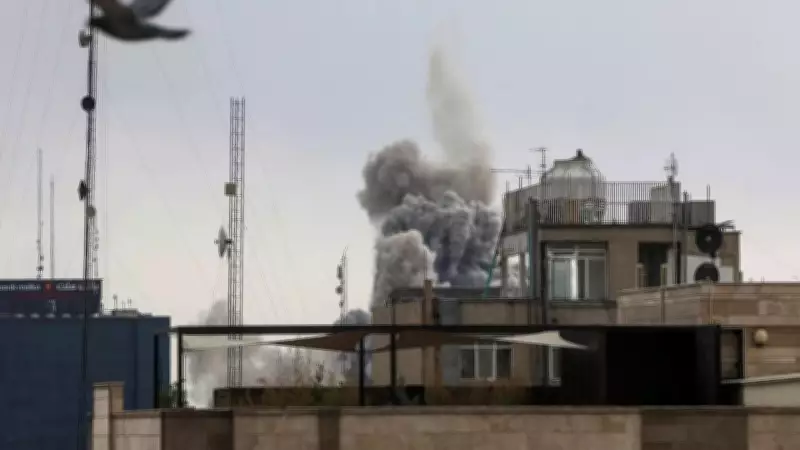
Middle East Tourism Suffers $600 Million Daily Losses Amid Escalating Iran-Israel Conflict
The ongoing war between Iran and Israel is inflicting severe economic damage across the broader Middle East region, with the tourism and travel industry now losing an estimated $600 million every single day. This staggering financial hemorrhage is primarily driven by widespread flight cancellations, regional airspace closures, and mounting security fears that have severely disrupted international travel patterns.
Tourism Sector Takes Devastating Hit
According to detailed estimates from the World Travel and Tourism Council (WTTC) cited by international media, the losses stem largely from the collapse in international visitor spending. Airlines have been forced to repeatedly alter schedules as the conflict—now entering its second week—spreads across multiple countries and threatens critical transport corridors and energy routes.
Before hostilities erupted, the WTTC had projected approximately $207 billion in international visitor spending for the Middle East region by 2026, highlighting the immense scale of economic disruption now unfolding. The war has sharply reduced flights to several key regional hubs, compelling major carriers to cancel or reroute services extensively.

- KLM has cancelled all flights to Dubai until at least March 28
- British Airways has implemented similar measures affecting numerous routes across the region
- Commercial aviation is operating at limited capacity due to airspace closures stretching across parts of the Gulf
- Thousands of travelers remain stranded or have been forced to alter their plans significantly
Gloria Guevara, President and Chief Executive of the WTTC, emphasized that tourism has historically demonstrated resilience in recovering from security crises when governments actively support travelers and restore confidence. She noted that past crises have shown the sector can rebound rapidly, sometimes within just two months, when authorities collaborate with the travel industry to reopen routes and assist stranded tourists.
Conflict Escalation Across the Gulf Region
The fighting initially erupted following US-Israeli strikes on Iranian targets on February 28, triggering retaliatory attacks by Tehran that have since widened the conflict across the strategic Gulf region. This escalation has raised serious concerns about energy supplies and global trade flows, with multiple incidents impacting critical infrastructure.
- Iran launched attacks targeting infrastructure across several countries, including a strike that sparked a major fire on Bahrain's Muharraq Island, home to the kingdom's international airport
- Another attack on Iraq's Basra port halted operations at the country's oil terminals after a vessel was struck during a ship-to-ship transfer
- Iran has issued threats against maritime traffic through the strategically vital Strait of Hormuz—a narrow waterway through which approximately one-fifth of the world's traded oil passes
The widening conflict has already disrupted shipping routes, fuel exports, and fertilizer supplies across the region, creating ripple effects in global markets.
International Response and UN Pressure
The United Nations Security Council voted 13-0 to adopt a resolution demanding Iran halt attacks on Gulf states, describing the strikes as a direct threat to regional stability and global trade. China and Russia abstained from the vote, while countries including India joined more than 130 nations in backing the Bahrain-led resolution condemning attacks on Gulf Cooperation Council states.
Simultaneously, the global energy market has come under substantial pressure as fears intensify over potential oil supply disruptions. In response:

- The International Energy Agency has agreed to release 400 million barrels of oil, marking the largest emergency release in its history
- The United States plans to release 172 million barrels from its Strategic Petroleum Reserve to stabilize markets
The conflict continues to evolve, with recent developments including Saudi Arabia intercepting a drone headed toward the Shaybah oil field and Israeli strikes targeting Hezbollah positions in Beirut. The Indian Ministry of External Affairs has condemned an attack on an India-bound Thai ship, stating that the loss of innocent lives in the conflict is 'unacceptable.' Meanwhile, Iran has issued warnings to US tech firms including Google, Amazon, Microsoft, and Nvidia, describing them as 'legitimate targets' in the escalating confrontation.





